As an Amazon Associate, we earn from qualifying purchases. Some links on this site are affiliate links at no extra cost to you. Our recommendations are based on thorough research and editorial judgment.


How to Turn a Simple Potted Tree Into a Topiary Over Time

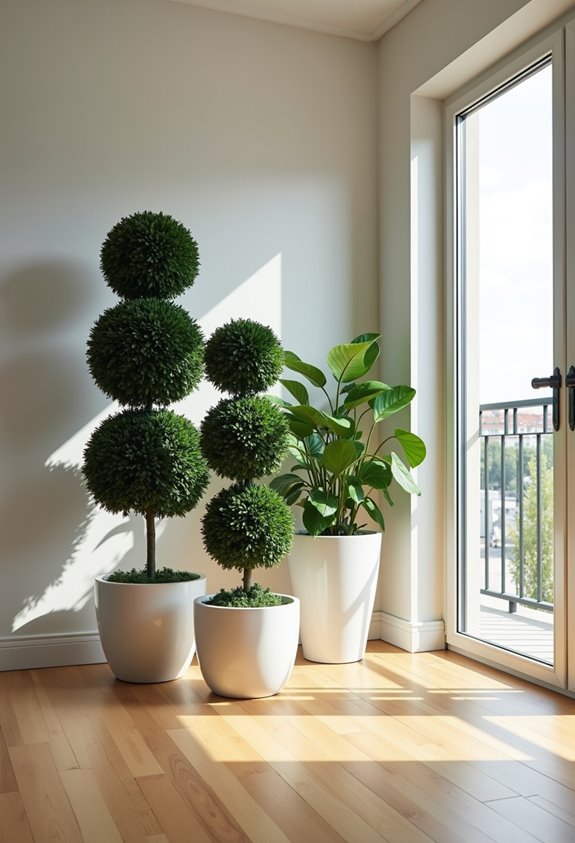
To turn a simple potted tree into a topiary, choose dense foliage species like boxwood or dwarf Alberta spruce. Use a container 6-12 inches wider than the root ball with drainage stones and a peat moss-potting soil mix. Prune regularly with sharp shears to shape a strong central stem, clipping for symmetry. Support branches with stakes or wire and repot every 1-2 years to prevent root crowding. Consistent care, watering, and gradual shaping lead to refined forms. Further details explain advanced techniques and seasonal adjustments.
Key Takeaways
- Select a dense-foliage plant like boxwood or Dwarf Alberta Spruce suited to your climate and container size for topiary shaping.
- Use clean pruning shears to shape a strong central stem and promote symmetrical, bushy growth through regular trimming 2-4 times annually.
- Train young, flexible branches with soft wire or twine, securing the central stem to stakes taller than the desired topiary height.
- Prepare a well-draining container with peat moss and potting soil mix, adding mulch to retain moisture and reduce weeds.
- Maintain the topiary by repotting every 1-2 years, monitoring soil moisture, applying fertilizer, and protecting from winter damage.
Selecting the Right Plant for Topiary
You may be interested


How does one select the ideal plant for a topiary? Choosing the right topiary plants involves prioritizing species with dense foliage and strong shape retention. Small trees or shrubs such as boxwood, Berberis Thunberg, or Dwarf Alberta Spruce are common selections because they maintain form well. The Dwarf Alberta Spruce is especially valued for its hardy nature, thriving in USDA Zones 2-8. Growth rate is also critical; faster growing plants allow quicker shaping, but slow growers can produce finer detail over time. Additionally, selecting plants with strong central stems simplifies training and pruning to create the desired shape. Climatic suitability, along with light, watering needs, and root space requirements, should guide the choice to guarantee healthy development and longevity in the topiary structure. For low-maintenance options, artificial spiral topiary trees with dense, realistic foliage offer a durable and visually appealing alternative for both indoor and outdoor spaces.
Gathering Essential Tools and Materials
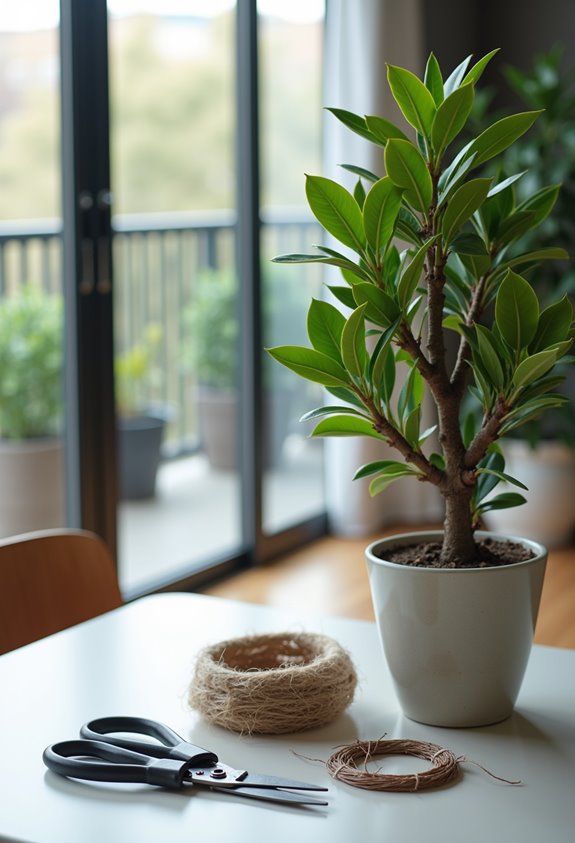
After selecting an appropriate plant like the Dwarf Alberta Spruce, gathering all necessary tools and materials secures successful shaping and maintenance. Essential cutting tools include pruning shears, clippers, and scissors for precise trimming. Choose a suitable potted tree with dense foliage that responds well to shaping efforts. The container should provide good drainage and be 6 to 12 inches wider than the root ball for stable growth. Preparing a proper soil mix is also critical; combining peat moss with regular potting soil supplies nutrients and retains moisture effectively. Additional items include stakes to support taller growth and mulch to conserve soil moisture while reducing weeds. Collecting these tools and materials beforehand secures a smooth experience when creating and maintaining a topiary over time. For added ease and consistent greenery year-round, consider using UV-resistant artificial trees as a low-maintenance alternative.
Preparing Your Container and Soil Mix

A properly prepared container and soil mix form the foundation of successful topiary growth. Select a sturdy container with drainage holes that is 6 to 12 inches wider than the root ball to provide space for root expansion and guarantee stability. Place drainage stones at the container’s bottom to improve water flow and avoid soggy roots. Use a soil mix blending peat moss and potting soil, optimizing aeration and moisture retention crucial for container plants. This mix supports healthy root development and prevents compaction. After planting, top the soil with mulch to conserve moisture and reduce weed growth. Regular monitoring of soil moisture is fundamental, as container plants tend to dry out faster than ground-planted ones, requiring more frequent watering and care. For added convenience, consider incorporating low-maintenance options that reduce the need for frequent care in your planting design.
Establishing the Central Stem
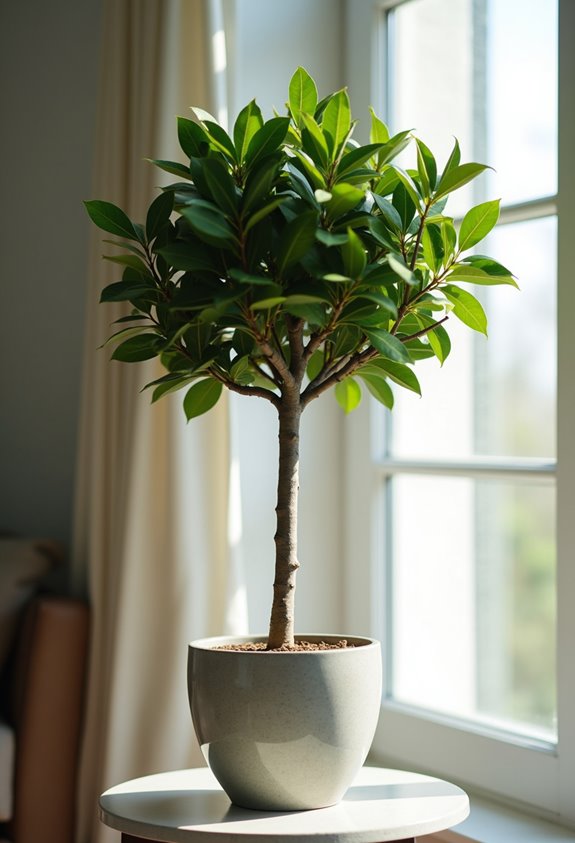
Selecting a small tree or shrub with a strong central stem sets the groundwork for topiary shaping. This main stem acts as the vertical backbone, supporting the overall structure. Gradually remove side shoots and offshoots near the base to encourage focused upward growth while maintaining a clean look. Regularly prune the central stem to promote strength and health, avoiding overly aggressive cuts until it is well established. Once it reaches the desired height, trimming the tip can stimulate denser foliage, enhancing the plant’s fullness. Consistent monitoring helps balance growth and stability, ensuring the central stem remains robust and prominent. Maintaining this disciplined pruning routine is essential before advancing into more detailed shaping, as it reinforces the foundational form critical for topiary success. For those seeking a low-maintenance option, using artificial trees can provide a lifelike appearance without the need for pruning or watering.
Initial Pruning and Shaping Techniques

Commence initial pruning by using sharp, clean pruning shears designed for precise cuts on small branches. Begin by selecting a tree with dense foliage like Dwarf Alberta Spruce or boxwood, ideal for shaping. Remove side shoots and offshoots near the base to establish a strong central stem. To encourage bushier growth, clip the top tip after the tree attains the desired height. Gradually trim excess growth, regularly evaluating symmetry to maintain balance. Implement shaping techniques focused on gradual, controlled cuts—avoid over-pruning to prevent stress and sparse foliage. Perform initial pruning two to four times annually, promoting healthy, compact growth. This consistent approach encourages denser foliage and better structural integrity, forming a solid framework for continued topiary refinement. Additionally, maintaining balanced arrangement enhances the overall aesthetic and structural stability of the topiary.
Training Branches With Wire or Rope
Once the initial framework of the topiary is established through pruning, guiding branch growth becomes the next step. Training branches involves using flexible wire or soft rope to gently secure them to a support structure, such as stakes firmly anchored in the pot. This method shapes the plant without constricting growth or damaging bark. Starting when branches are young and pliable allows for easier manipulation, encouraging a balanced, symmetrical form. Regularly inspecting the wire tension prevents girdling, which could harm the stem. As branches mature and hold their form, the training materials should be gradually removed to reduce stress. Employing support stakes guarantees stability, particularly when shaping extended limbs, and helps maintain desired angles. This technique systematically enhances structural integrity while refining the topiary’s overall silhouette. For added support and longevity in outdoor settings, consider using wind resistance strategies to keep your topiary stable against environmental factors.
Encouraging Dense Growth Through Pruning
Promoting dense growth in a potted topiary requires strategic pruning techniques focused on the central stem. Pruning away side-shoots and offshoots at the base encourages upward growth, establishing a strong central stem. Regularly trimming the tip of the main stem stimulates bushier branching, gradually creating a fuller appearance. It is important to prune gradually, avoiding over-pruning that stresses the plant and slows development. Depending on the target height, allow the stem to grow taller before trimming to guarantee the top foliage remains dense. Consistent pruning, performed two to four times annually, supports shape maintenance and helps the plant build natural density over time. These pruning methods effectively encourage dense growth essential for a well-formed topiary’s structure and aesthetic. For those seeking an alternative, consider using adjustable branches found in faux cone topiary trees to customize the shape with minimal upkeep.
Supporting Your Topiary With Stakes
A sturdy stake is a fundamental component for supporting a growing topiary. Use a strong wooden dowel or metal rod, inserted at planting or pruning to minimize root disturbance. The stake should exceed the intended topiary height by several inches, allowing room for future growth without bending. Secure the central stem with gentle ties, such as soft twine, to prevent constriction or stem damage while maintaining support. Regular inspections of the stakes and ties are necessary to adjust them as the topiary enlarges, ensuring continuous structural integrity. Proper staking encourages upright, stable development critical for shaping the topiary. These support measures provide a reliable framework, facilitating controlled growth and preventing breakage in variable weather or handling conditions. Using a durable metal base for stability can also enhance the support system as the topiary grows.
Repotting for Root Health and Growth
After securing structural support, attention shifts to root care through periodic repotting. Repotting every 1-2 years prevents roots from becoming root-bound, which can restrict nutrient absorption and growth. A container 1-2 inches wider in diameter than the current pot allows space for root expansion and promotes root health. It is crucial to choose pots with drainage holes to avoid waterlogging, which can cause root rot. During repotting, roots should be carefully loosened, and any damaged or tangled roots trimmed to stimulate healthy new growth. Using a fresh mix of peat moss and soil helps provide essential nutrients and improves moisture retention. This balance guarantees the tree remains vigorous, supporting the overall development required for a well-formed topiary over time. Additionally, selecting a pot with stability is important to prevent accidents, especially in smaller living spaces like apartments.
Seasonal Care and Maintenance Tips
Although maintaining a topiary requires year-round attention, adapting care routines to each season is important for its health and form. Seasonal care includes regularly checking soil moisture, as container topiaries need more frequent watering than ground-planted ones to avoid drying out. In spring, applying slow-release fertilizer supports foliage growth and overall strength. Pruning should occur lightly 2-4 times yearly, using sharp clippers for clean cuts to encourage bushier shapes. For an evergreen tree, winter protection is essential—windbreaks made from burlap shield against cold damage and winter burn. Dead growth should be cut back, and seasonal decor like pine cones or ornaments, often secured with floral foam, adds visual interest during festive periods while not hindering plant health. This balanced approach guarantees a thriving, well-maintained topiary throughout the year. Using energy-efficient LED lights in your seasonal decor can enhance festive appeal while being safe and cost-effective.
Progressing From Simple to Complex Shapes
Building on routine seasonal care, shaping a topiary begins with selecting a plant featuring dense foliage, such as a Dwarf Alberta Spruce. First, establish a clear central stem, then gradually prune side-shoots to encourage denser growth. Simple shapes, like lollipops, offer a solid starting point for beginners learning to make topiary trees. Regular pruning, ideally two to four times yearly, guarantees the plant maintains its defined form. As growth stabilizes, progress to complex designs like spirals or pom-poms by clipping branch tips and guiding new shoots. Using stakes supports taller topiaries, preventing bending during shaping. Consistent, light pruning encourages refinement and structural integrity, essential for intricate patterns. Over time, this process transforms a basic potted tree into an artistically sculpted topiary, combining patience with precise horticultural techniques.
Frequently Asked Questions
Can Topiary Grow in Containers?
Topiary can successfully grow in containers through container gardening methods. Proper pruning techniques are essential to maintain shape, especially for indoor plants. Regular care and adequate drainage guarantee healthy growth and aesthetic appeal in confined spaces.
How to Topiary a Tree?
To topiary a tree, one employs pruning techniques to establish shape, applies shaping methodologies focusing on central stems and foliage density, and follows maintenance tips including regular trims for form retention and healthy, bushy growth.
Which Is the Simplest Form of Topiary?
A gardener in Vermont created a classic lollipop topiary, exemplifying the simplest form of topiary. Simple shapes, targeted pruning techniques, and careful plant selection like Boxwood guaranteed swift, elegant transformation from ordinary potted trees into charming, sculpted art.
Are Topiaries Hard to Keep Alive?
Topiaries are not inherently hard to keep alive when appropriate pruning techniques are applied. Their watering needs and sunlight requirements must be met consistently, ensuring healthy growth and maintaining their shape without causing stress to the plant.