As an Amazon Associate, we earn from qualifying purchases. Some links on this site are affiliate links at no extra cost to you. Our recommendations are based on thorough research and editorial judgment.


Beginner’s Guide to Training a Small Indoor Topiary Tree

A small indoor topiary requires species like boxwood or myrtle, with dense foliage and strong stems. Use sharp pruning scissors and stakes to shape the plant, pruning new growth every two to four weeks for density. Maintain humidity at 40-60% and water every two to three days, ensuring soil drains well to prevent root rot. Position near indirect light and rotate regularly for symmetry. Follow these basics to master foundational care before exploring more advanced techniques.
Key Takeaways
- Choose dense-foliage plants like boxwood or myrtle that thrive in indoor light and humidity levels between 40% and 60%.
- Prepare a healthy plant with a strong, straight stem and allow it to acclimate for 2-3 weeks before shaping.
- Use sharp pruning scissors to regularly trim new growth every 2-4 weeks, rotating the plant for balanced shaping.
- Water every 2-3 days, keeping soil moist but not soggy, and mist weekly to maintain humidity during winter.
- Maintain consistent humidity and temperature (65°F-75°F), avoid drafts, and position near natural light for healthy growth.
Choosing the Right Plant for Your Indoor Topiary
You may be interested


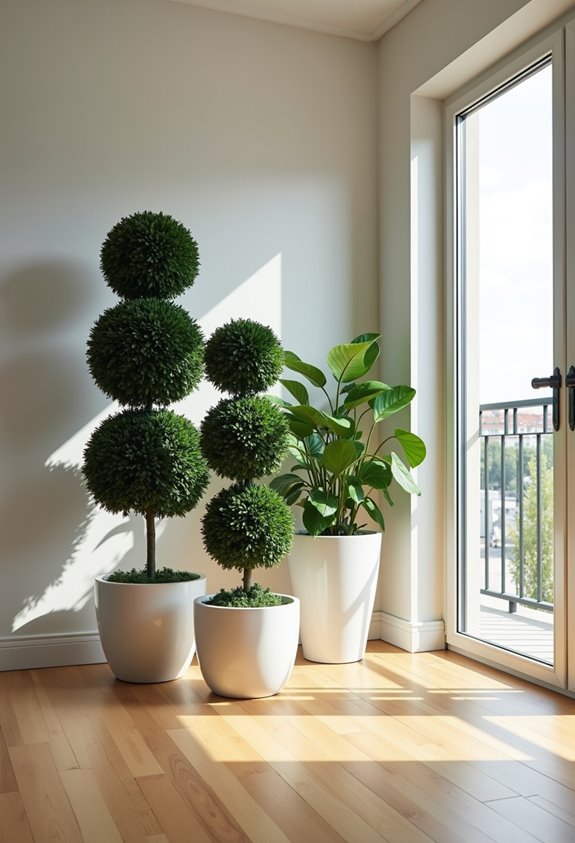
Selecting the right plant is essential for successful indoor topiary training. Choosing the right plant for your indoor topiary involves selecting species with dense foliage and strong, straight stems. Ideal options include myrtle, rosemary, and boxwood, known for their compact leaves and ability to maintain defined topiary shapes. Scented geraniums and dwarf junipers add appealing fragrance and visual texture. Additionally, it is crucial to take into account indoor conditions such as light and humidity. For example, boxwood thrives in well-lit areas with humidity around 40-60%. Plants that tolerate lower light should be chosen if sunlight is limited. These factors guarantee the indoor topiary can grow healthily, retain its shape, and provide a visually pleasing, structured appearance tailored to the desired topiary design. For those seeking maintenance-free options, consider incorporating artificial trees that provide all the aesthetic benefits without the care requirements.
Essential Tools for Topiary Training

Proper tools lay the foundation for effective indoor topiary training and maintenance. Sharp pruning scissors are essential for precise pruning techniques, allowing detailed shaping without damaging delicate foliage. Hand shears assist with light trimming, while hedge shears help form larger established shapes and maintain overall structure. A sturdy stake supports young topiary trees, ensuring upright growth and preserving the desired form. Sphagnum moss is useful as a filler in vining topiary frameworks, offering moisture retention and fullness, though it is not required for dense-leaved shrubs. Additionally, a high-quality watering can or spray bottle helps regulate soil moisture, vital for healthy plant development. Using clean, sharp tools also prevents disease spread and promotes vigorous regrowth by making accurate cuts. For those seeking maintenance-free options, faux boxwood topiary trees provide a durable and attractive alternative that requires no pruning or watering.
Recommended Products
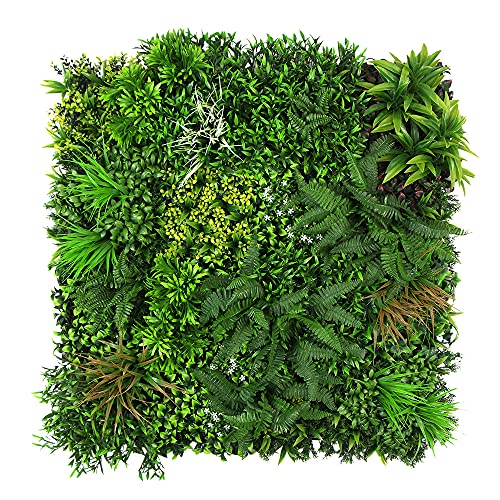
📏 LARGE 40"x40" COVERAGE - Each panel covers approximately 11 square feet of space. Single panel design provides instant privacy screening for gardens, patios, balconies, and backyards. Dense foliage helps block unwanted views while enhancing aesthetics.

[ 100% PRIVACY & DENSE GRASS WALL PANELS ] Transform your space with our 48" x 120" (40 sq ft) artificial grass wall. Featuring an ultra-dense, 3D leaf design, these faux boxwood panels provide 100% blockage from prying eyes while allowing air to flow. It’s the ultimate artificial ivy privacy fence screen for hiding unsightly views and securing your personal space.

2 feet in length
Preparing Your Plant for Shaping

A small number of plants, such as myrtle or rosemary, prove perfect for indoor topiary shaping. Selecting a well-established specimen with a strong, straight stem simplifies preparing the plant for shaping. Inspect leaves and stems carefully to verify the plant is healthy and pest-free; this promotes robust growth essential for successful training. Use a pot with adequate drainage holes to prevent excess moisture, which can cause root rot and inhibit growth. After potting, allow the plant to acclimate and grow for at least two to three weeks before beginning any shaping. Consistent watering is necessary to maintain soil moisture without causing sogginess, creating ideal conditions for shaping and sustaining a small indoor topiary tree over time. For a low-maintenance alternative, consider artificial options made from UV-resistant polyethylene that provide year-round greenery without watering or pruning.
Selecting an Appropriate Location Indoors

When cultivating an indoor topiary tree, light quality and temperature play an essential role in its health and development. Indoor topiary trees perform best in bright, indirect sunlight, which closely replicates their native Mediterranean or subtropical environments. Locations near east or north-facing windows often provide suitable lighting without direct sun damage. Maintaining temperatures between 65°F and 75°F avoids stress from drastic fluctuations. High humidity levels also support foliage health; using a humidifier or placing a tray filled with water and pebbles nearby can increase ambient moisture effectively. Positioning the plant away from drafts and heating vents prevents exposure to sudden temperature changes or strong air currents, which can stunt growth. Regularly rotating the topiary each week guarantees even light distribution and promotes balanced growth. Additionally, incorporating UV-protected materials in the decoration around the plant can help maintain its vibrant appearance and protect it from indoor light degradation.
Basic Pruning Techniques for Beginners

Mastering basic pruning techniques is essential for shaping and maintaining topiary trees effectively. Use sharp, clean scissors or narrow blade pruners for precise pruning cuts that reduce disease risk. Begin by removing dead or damaged branches to help the tree focus energy on healthy growth. Clipping new growth lightly and regularly, ideally every two to four weeks, supports dense foliage and preserves the intended shape. Assess the tree’s overall symmetry before cutting by rotating it to guarantee uniformity from all angles. Training a topiary requires patience, as achieving the desired form may take multiple pruning sessions. Consistent clipping combined with careful pruning cuts guides growth while maintaining vigor and aesthetic balance in small indoor topiary trees. Faux topiary trees can offer a low-maintenance alternative with adjustable branches that allow for easy customization without pruning.
Recommended Products

⚠️ [Tips] - The bark of dried branches is more resistant. If you can't cut through it, try sharpening the blades or cutting thinner branches.

[JAPANESE HAND PRUNERS] These traditional Japanese garden pruning shears are perfect for trimming garden trees, fruit trees, floral arrangements, Ikebana, bonsai, and other gardening tasks.

Swiss Precision Engineering – Crafted in Switzerland for exceptional cutting performance trusted by professionals and home gardeners alike.
Using Stakes and Frames to Guide Growth
Pruning shapes the growth, but physical guides guarantee structure and form develop correctly. When training a small indoor topiary tree, select sturdy stakes about the height of the intended shape. Stakes support the plant while it grows and maintain an upright stem. Use soft ties or twine to secure the plant loosely, allowing stem expansion without constriction. For intricate forms, wire frames guide trailing species like ivy to wrap naturally around the structure. Position stakes or frames close to the main stem to avoid damage as the tree expands and to keep a straight form. Regularly adjust ties or bind new growth to the stakes or frames, ensuring continuous support and consistent shaping during the topiary’s development. This method forms the essential skeleton for healthy, attractive growth. For ongoing care, remember that most boxwood topiaries require only monthly dusting to maintain their appearance without watering or pruning.
Recommended Products

ULTRA-REALISTIC ARTIFICIAL TOPIARY BALLS - Designed to replicate the natural beauty of real greenery, these artificial topiary balls feature lifelike leaves with rich color variation and texture. The dense foliage creates a full, perfectly rounded shape that elevates any space. Ideal for indoor décor, outdoor planters, front door accents, and landscaping, they deliver a polished, high-end look without the maintenance of live plants.
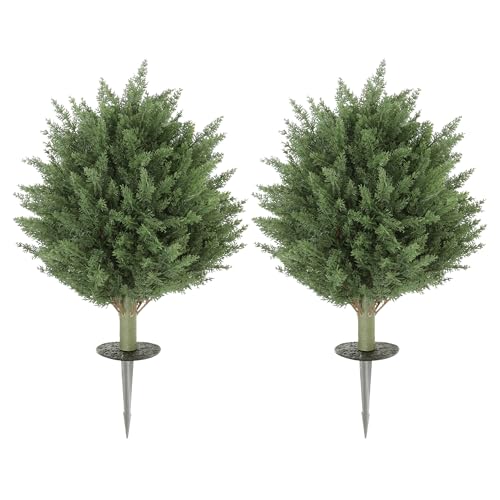
Lifelike appearance: Each artificial cypress tree of the set features 387 lush leaves, offering a realistic and dense appearance, great for any space needing a touch of greenery

Artificial 27" Boxwood Ball Bush with Spike for shoving in thr ground or dirt or planter.
Watering and Moisture Management
Proper watering is essential for maintaining the health of indoor topiary trees. Indoor topiaries typically require watering every two to three days. Checking the top inch of soil guarantees moisture management is accurate; if the soil feels dry, watering is needed. It is important to avoid soggy soil, since excess water can cause root rot. Using pots with drainage holes prevents water buildup and promotes root aeration. During winter, when humidity drops, misting your topiary weekly helps maintain proper moisture levels. Monitoring leaf condition is also important; yellowing or dropping leaves often signal inconsistent watering or poor moisture control. Consistent moisture management supports growth and preserves the plant’s aesthetic shape, which is essential for trained topiaries kept indoors. For those seeking low-maintenance options, artificial trees provide a realistic alternative without the watering and moisture concerns.
Feeding and Fertilizing Your Topiary
Feeding an indoor topiary tree involves careful nutrient management to encourage healthy growth. Fertilizing every 4 to 6 weeks during spring and summer with a balanced, water-soluble fertilizer supports ideal development. It is essential to dilute the fertilizer to half the recommended strength to avoid nutrient burn. Applying a slow-release fertilizer once in the spring offers a steady nutrient supply, reducing frequent feeding needs. Always water the topiary thoroughly before fertilizing to protect roots and improve nutrient uptake. Regular monitoring is important; yellowing leaves may signal nutrient deficiencies requiring adjustments in the feeding routine. Following these guidelines guarantees that the indoor topiary receives adequate nutrition for vibrant foliage and structural integrity throughout its growth cycle. Additionally, using UV-resistant materials around your topiary area can help protect the plant from harmful rays while maintaining its aesthetic appeal.
Recommended Products

Package contains 160 evergreen fertilizer spikes and are produced to avoid wasteful runoff, mess, hazards and smells

FEEDS ALL PLANTS: Miracle-Gro Water Soluble All Purpose Plant Food is a plant fertilizer that feeds all outdoor, in-ground and indoor plants, including roses, flowers, houseplants, vegetables, and trees

Best value, one gallon jug makes 320 gallons of nutrient rich, odorless fertilizer that feeds instantly
Maintaining Humidity and Temperature Indoors
Although indoor topiaries are adaptable, maintaining consistent humidity between 40% and 60% is critical for healthy foliage. Humidity can be regulated by misting the leaves occasionally or placing a humidifier nearby during dry seasons. Locating the topiary in naturally moist rooms, like kitchens or bathrooms, also aids in sustaining humidity levels. Ideal temperature ranges from 65°F to 75°F (18°C to 24°C), supporting ideal growth and avoiding stress. Avoid cold drafts or direct heat sources that may cause leaf damage or stunt growth. Monitoring the plant for browning tips or drooping leaves indicates when humidity or temperature adjustments are necessary. Consistent environmental conditions contribute considerably to the longevity and aesthetic appeal of the indoor topiary tree, ensuring balanced growth without additional intervention. Additionally, incorporating faux privacy trees indoors can enhance aesthetic appeal without the maintenance challenges of live plants.
Regular Grooming and Pruning Schedule
Establishing a regular grooming schedule supports the topiary’s structural integrity. A consistent regimen of frequent pruning every one to two weeks during the growing season maintains shape and encourages dense foliage. Sharp, clean pruning scissors are essential for precise, damage-minimizing cuts that foster healthy regrowth. Monitoring the topiary’s new shoots allows timely trimming to prevent overgrowth, preserving the intended design. Before each session, evaluating shape and symmetry by rotating the plant guarantees even clipping on all sides. Adjusting the frequency of regular grooming during spring and summer accounts for faster growth rates, optimizing the tree’s health and appearance. This disciplined approach balances aesthetic control with vigorous, uniform development of a small indoor topiary tree. For those using artificial topiaries, minimal upkeep involves just dusting or wiping down leaves to maintain their vibrant appearance and long-lasting colors.
Dealing With Common Topiary Challenges
Maintaining a consistent pruning routine supports a healthy topiary but does not eliminate all growth issues. Leggy growth often results from insufficient light, so placing the topiary near a south-facing window mimicking Mediterranean conditions is essential. Proper soil moisture is important; overly wet soil invites root rot, while dry soil stresses the plant and slows growth. Weekly pruning of new shoots encourages bushier shapes and prevents overgrowth. Indoor humidity directly impacts leaf retention—misting with water once a week during winter raises humidity levels, reducing leaf drop. Avoid drafts and direct heat sources, since temperature swings can destabilize the plant’s environment. These steps collectively address common challenges in maintaining a vibrant indoor topiary, balancing pruning and humidity needs effectively.
Recommended Products

2-in-1 Versatile Design: This electric pole pruner features a dual-function design, working as a standalone electric pruning shear or attached to an extendable pole for high branch trimming. Ideal for backyard trees, tall hedges, and orchard maintenance, it covers both low and high pruning tasks, offering convenience, efficiency, and precise cuts in one tool
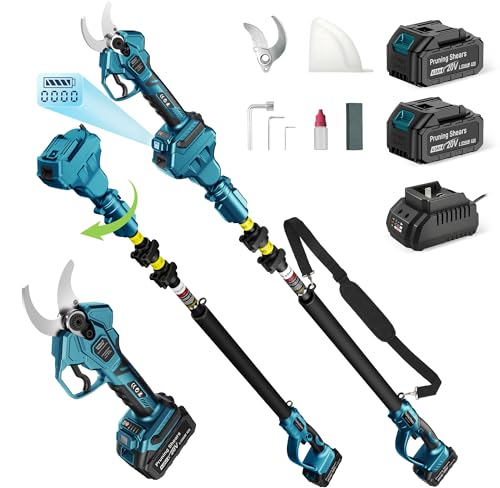
【2-in-1 Pole Pruner with Extension Rod】Effortlessly switch between handheld and pole modes (range: 5.4 ft to 9.2 ft). Our battery pruning shears allows you to easily trim low shrubs or reach high branches with precision. With 4 adjustable cutting diameters (0.4"-0.6"-1"-1.6"), it meets various pruning needs for gardens, yards, orchards, farms, and more. Ideal for a variety of gardening tasks!

2-in-1 Handheld & 9 ft Pole Mode: Switch between handheld pruning and high reach trimming with the telescopic pole(Range: 4.9-9 ft ). The 180° rotating head helps position the blade for vertical, angled and side branches, making this pole pruner useful for fruit trees, shrubs and overhead branches
Decorating and Displaying Your Indoor Topiary
How can interior spaces best showcase the unique form of a topiary tree? Decorating and displaying indoor topiaries begins by choosing containers matching home décor while ensuring good drainage to prevent root rot. Group smaller topiary plants on stands or tables at varying heights, creating depth and visual interest. Position the topiary near natural light or rotate weekly for even growth, mimicking outdoor conditions essential for balanced appearance. Incorporate seasonal decorations like holiday ornaments or natural elements to enhance charm without overwhelming. Use simple geometric shapes in arrangements to highlight the topiary’s sculptural form as a focal point. These practical steps, combining aesthetic and horticultural needs, optimize the indoor presentation and health of small indoor topiary trees for consistent visual appeal.
Frequently Asked Questions
How to Start a Topiary for Beginners?
Starting a topiary for beginners involves selecting suitable plants and applying precise pruning techniques to create defined topiary shapes. Consistent trimming promotes dense growth, while shaping gradually refines the form, ensuring structural stability and aesthetic appeal indoors.
How to Care for an Indoor Topiary?
Caring for an indoor topiary demands soil selection so precise it rivals alchemy. Watering techniques must balance moisture without drowning roots, ensuring consistent hydration. Regular pruning and indirect light foster shape, significance, and lush foliage growth.
Are Topiaries Hard to Keep Alive?
Topiaries are not inherently hard to keep alive, though different topiary types require tailored care. As indoor plants, they need consistent watering, proper light, humidity control, and regular pruning to maintain health and form effectively.
How Often Should Topiary Balls Be Trimmed?
Like a sculptor shaping marble, trimming frequency for topiary balls demands patience and precision. Seasonal maintenance calls for every 2-4 weeks in spring and summer, tapering to monthly sessions in cooler months to preserve form and vigor.