As an Amazon Associate, we earn from qualifying purchases. Some links on this site are affiliate links at no extra cost to you. Our recommendations are based on thorough research and editorial judgment.

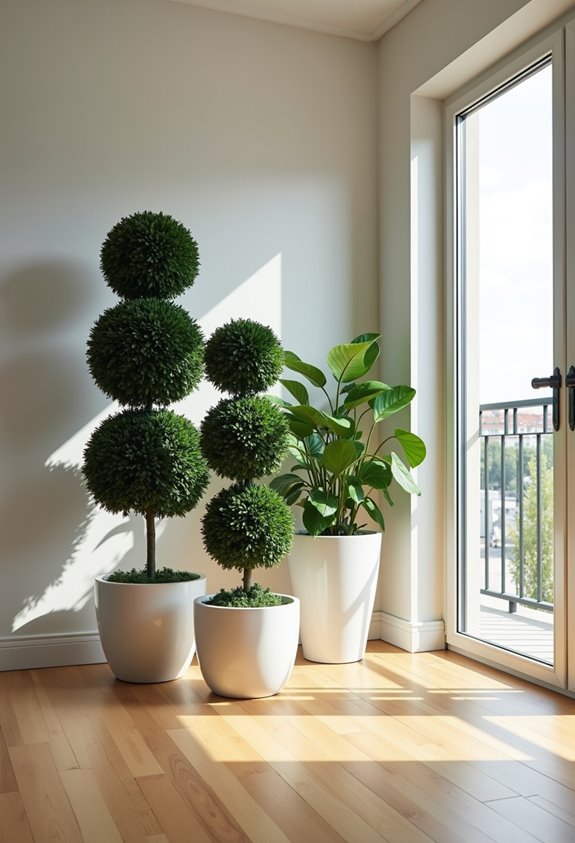
Mixing Topiary and Natural‑Form Trees in One Space

Mixing topiary with natural-form trees enriches garden design through structured shapes and organic textures. Topiary shapes like cones or spirals create clear focal points, while natural trees add height and seasonal color variety. Maintaining 1 to 2 feet spacing reduces competition and preserves plant health. Pruning topiary in early summer guarantees sharp lines alongside growing natural trees. Combining evergreens with deciduous species increases year-round visual interest. Further insights reveal how to balance, arrange, and care for these elements effectively.
Key Takeaways
- Combine structured topiary with natural-form trees to create striking visual contrast and seasonal interest in garden design.
- Select evergreen topiary shapes like cones and balls to provide year-round structure alongside varying natural tree foliage.
- Arrange taller natural trees behind lower topiary shapes for balanced height and spatial harmony.
- Maintain proper spacing (1 to 2 feet) and prune regularly to promote healthy growth and prevent overcrowding.
- Use contrasting foliage colors and textures to enhance garden depth and biodiversity while supporting pollinators.
Benefits of Combining Topiary With Natural-Form Trees
You may be interested


When combining topiary with natural-form trees, garden designers can achieve a striking interplay of shapes and textures. Topiary offers structured elegance, creating defined spaces and pathways within garden design. Natural-form trees provide scale and continuity, making landscapes appear more expansive. This contrast generates strong visual interest, guiding visitors through distinct focal points. Additionally, the mix supports biodiversity, as natural-form trees attract pollinators while topiary adds ornamental value. Seasonal interest is enhanced, since topiary holds its shape year-round, whereas natural trees display changing foliage colors and textures across seasons. Employing both elements strategically optimizes spatial definition and ecological function in gardens, balancing aesthetics with environmental considerations to produce vibrant, engaging outdoor spaces. Incorporating slim, durable trees made from UV-resistant polyethylene can further enhance these spaces by providing long-lasting, low-maintenance greenery.
Selecting the Right Topiary Shapes for Your Garden

Topiary shapes play an essential role in defining garden aesthetics and spatial organization. Classic topiary shapes like cones, balls, and spirals help create topiary shapes that add structure and visual interest. Evergreen plants such as Boxwood and Arborvitae are ideal for cone and ball shapes, while Dwarf Alberta Spruce suits elegant spirals best. Established geometric forms are easier to maintain, providing clear focal points or privacy elements. Mixing topiary shapes, for instance alternating spirals with balls along pathways, creates dynamic curb appeal. Promoting healthy growth requires regular pruning during the growing season, which preserves sharp lines and foliage density. Choosing robust evergreens like Alberta Spruce guarantees resilience and longevity, making them a practical choice for well-defined, low-maintenance topiary designs. Additionally, considering UV-resistant artificial cedar topiary trees offers a durable, maintenance-free alternative that retains vibrant color year-round.
Choosing Complementary Natural-Form Tree Species

Although structured topiary provides clear geometric forms, incorporating natural-form trees enriches garden composition with varied textures and heights. Selecting complementary species like the Japanese Maple enhances visual interest, as its delicate leaves contrast well with rigid topiary shapes. Trees such as Eastern Redbud add vibrant color, balancing evergreen topiary greens with seasonal blooms. Choosing taller specimens like Northern Red Oak introduces vertical variety without overshadowing low-growing geometric shapes. Conifers, including Eastern White Pine, offer soft silhouettes that harmonize naturally with clipped evergreens. For successful integration, matching soil and light requirements between topiary and natural-form trees is essential to maintain uniform growth and health. Overall, combining structured topiary with carefully chosen natural trees creates a cohesive, visually dynamic garden landscape. Using artificial juniper branches with UV protection can also add year-round greenery with minimal maintenance, enhancing garden aesthetics without compromising plant health.
Creating Visual Contrast Through Shape and Texture

Contrasting geometric topiary shapes with organic tree forms enriches garden aesthetics. Topiary shapes, such as spheres or spirals, create structure with sharply defined edges and symmetry. These geometric shapes stand out starkly against the irregular silhouettes of natural-form trees like maples or oaks, enhancing visual appeal through shape contrast. Utilizing diverse textures contributes to this effect—dense, clipped foliage of topiaries contrasts with rough bark and varied leaf patterns found on natural trees. This combination guides the eye and introduces layered spatial complexity. By blending topiary shapes and natural beauty, designers create sensory richness and clear organization within outdoor spaces. The interplay of precise geometry and flowing lines offers both order and natural dynamism, elevating overall garden composition without sacrificing functional landscape design. Incorporating elements with flame-retardant materials enhances safety when combining various plant forms in designed spaces.
Designing Balanced Garden Layouts Using Both Styles

Creating a balanced garden layout involves carefully placing geometric topiary alongside natural-form trees to highlight each style’s strengths. In garden design, topiary often serves as focal points or lines pathways, providing clear, structured shapes. Natural trees add height and layered canopies for depth, typically positioned behind or beside topiary elements to enhance perspective. Proper spacing, such as maintaining at least 3 to 5 feet between forms, prevents overcrowding and allows visual interest to emerge naturally. Using evergreen topiary guarantees year-round structure, while deciduous natural trees introduce seasonal texture and color changes. Varying heights, with taller natural trees behind lower, symmetrical topiary, creates dimension. This careful arrangement balances contrasting shapes, maintains harmony, and maximizes both styles’ impact within a cohesive garden design framework. Additionally, choosing artificial topiary with UV-resistant materials ensures that your garden maintains its intended aesthetic despite sun exposure.
Using Topiary to Define Outdoor Spaces
Several established topiaries can effectively define outdoor spaces by forming clear, structured boundaries around garden areas. These sculpted plant forms act as natural fences, guiding movement while organizing garden layouts and enhancing visual interest. By placing topiary structures strategically, designers separate distinct zones, creating privacy without solid walls or barriers. The geometric precision of topiary contrasts with the organic shapes of natural trees, adding layered complexity to garden composition. In smaller gardens, tall, narrow topiaries can maximize the sense of space, while spherical or tiered forms anchor corners or paths. Such thoughtful use of topiary defines areas clearly, supports flow, and emphasizes design intent. Combined with natural trees, topiary structures bring order and elegance to any outdoor environment, reinforcing spatial definition within versatile garden designs. Additionally, selecting climate-appropriate species ensures that both topiary and natural trees thrive effectively in the space.
Incorporating Natural-Form Trees to Soften Structured Elements
When paired thoughtfully, natural-form trees soften the sharp outlines of structured topiary elements. Combining these trees with topiary balances rigidity and organic flow, enhancing garden designs with layered textures. Selecting species like ornamental cherries or maples, with varied foliage densities, contrasts the clipped, smooth surfaces of topiary. This blend introduces dynamic vertical and horizontal structures, linking formal and informal sections seamlessly. Natural-form trees also introduce seasonal interest through spring blossoms and autumn colors, enriching static topiary groups. The visual interest created by this contrast increases as light interacts differently with dense canopies versus trimmed shapes. Implementing this approach requires considering spatial layout, tree maturity, and growth habits to maintain harmony without overcrowding structured elements. Such thoughtful mixing elevates overall composition while avoiding harsh shifts between garden styles. For indoor or apartment settings, choosing compact tree options that offer varied forms can replicate this balance in limited spaces.
Tips for Pruning and Maintaining Topiary Near Natural Trees
Prune topiary near natural trees carefully to protect both plant forms and maintain garden harmony. Use sharp, clean pruning tools to prevent damage and encourage healthy growth. Maintain proper spacing, ideally one to two feet, between topiary and natural trees to reduce nutrient and sunlight competition. Regular maintenance includes shaping topiary during early summer, allowing new growth to blend with natural trees’ organic forms, enhancing design contrast. Additionally, monitor pests and diseases frequently, since close planting can transfer issues quickly between plants. Opt for rounded or flowing topiary shapes to complement natural trees and avoid visual clashes. Consistent care guarantees both structured and natural elements thrive together in a balanced landscape, preserving their unique characteristics while enhancing overall garden aesthetics. When space is limited, consider incorporating compact artificial trees as maintenance-free decorative alternatives to natural plants.
Seasonal Considerations When Mixing Topiary and Natural Trees
Seasonal cycles play a pivotal role in designing landscapes that combine topiary and natural-form trees. Topiary plants offer year-round structure, contrasting with natural trees that exhibit clear seasonal changes in foliage. During spring and summer, blooming natural trees bring vibrancy around static topiaries, increasing visual interest. Autumn’s colorful leaves create a striking backdrop for the evergreen forms of many topiaries. In winter, bare deciduous trees emphasize topiary shape and texture, maintaining presence through their evergreen nature. Pruning schedules for topiaries should align with natural growth cycles of surrounding trees, ensuring harmonious integration. Coordinated maintenance prevents one element from overpowering the other, while respecting their differing seasonal rhythms. This balance enhances overall landscape appeal throughout varying weather and time. Additionally, choosing materials and components with durability and stability in mind guarantees that landscape elements remain visually appealing and structurally sound across seasons.
Enhancing Garden Interest With Color and Foliage Variety
Although topiary and natural-form trees differ structurally, their combined foliage color and texture enrich garden composition considerably. Mixing evergreen topiary with deciduous trees introduces varied foliage colors that enhance seasonal interest by providing constant visual appeal, even in winter months. Structured shapes such as spirals or balls in topiary contrast the irregular canopies of natural trees, creating focal points and layering effects. Underneath deciduous canopies, dense topiary foliage adds year-round definition, balancing seasonal blooms above. The deep greens of evergreen topiary complement the vibrant hues often found in deciduous leaves and flowers, enriching texture and color variety. This thoughtful blend of form and color results in a dynamic garden space that sustains interest and depth throughout each season. Choosing topiaries made from UV-resistant and weatherproof materials ensures that vibrant color and shape are maintained year-round with minimal upkeep.
Frequently Asked Questions
What Is the Rule of 3 in Landscaping?
The rule of 3 in landscaping is a design principle emphasizing groupings of three plants to achieve visual balance, enhance spatial harmony, and reinforce design themes. Its rule application promotes plant variety and cohesiveness within landscape design.
What Is the 70 30 Rule in Gardening?
Killing two birds with one stone, the 70/30 rule in gardening guarantees garden balance by emphasizing 70% foliage variety and 30% flowering plants, fostering plant aesthetics, design principles, landscaping harmony, and enhanced visual impact throughout the seasons.
Are Topiaries Still in Style?
Topiary trends remain strong, offering design inspiration across varied garden styles. Popular varieties simplify seasonal maintenance, while expert installation tips guarantee longevity. Their structured elegance continues to captivate gardeners seeking enduring aesthetic appeal.
How Close Can I Plant Two Trees Together?
Research shows tree spacing of 6 to 10 feet optimizes companion planting, ensuring proper plant growth and meeting soil requirements. Adequate distance maintains visual balance and reduces maintenance needs, preventing resource competition and promoting healthier landscapes overall.


