As an Amazon Associate, we earn from qualifying purchases. Some links on this site are affiliate links at no extra cost to you. Our recommendations are based on thorough research and editorial judgment.


Landlord‑Friendly Green Decor: Trees That Don’t Leave Marks

Landlord-friendly trees for rental properties often feature non-invasive roots and slow growth to prevent structural damage. Species like Hinoki Cypress, Emerald Green Arborvitae, and English Holly grow between 10 to 50 feet with compact root systems that avoid disrupting foundations or pavements. Trees such as Sky Pencil Holly fit limited spaces and allow container gardening for easy care. These selections minimize maintenance while preserving aesthetics. Understanding their specific planting and care guarantees successful integration on rental grounds. More detailed guidance follows.
Key Takeaways
- Choose slow-growing trees like Emerald Green Arborvitae to minimize root damage and structural risks in rental properties.
- Opt for compact trees such as Sky Pencil Holly that fit small spaces and prevent invasive root spread.
- Select trees with non-invasive root systems, including Hinoki Cypress and Spartan Juniper, to protect pavement and foundations.
- Maintain proper planting distance of at least five feet from buildings to reduce potential damage.
- Use container gardening for easy tree relocation and minimal landscape impact in rental settings.
Tree Varieties Suitable for Rental Properties

You may be interested


When selecting trees suitable for rental properties, height and root structure are key considerations. Trees like the Emerald Green Arborvitae grow up to 15 feet tall, featuring slow growth and compact size, making them landlord-friendly for small spaces. Sky Pencil Holly reaches 8 to 10 feet, with a narrow form that fits limited garden areas while providing privacy. Spartan Juniper achieves 15 feet in height and 3 to 5 feet width, delivering vertical privacy without aggressive roots. Flowering Dogwood grows 15 to 25 feet tall, offering seasonal visual interest with a low-impact root system. In warmer climates, Weeping Podocarpus grows 35 to 45 feet, requiring minimal maintenance and presenting non-invasive roots. For renters or landlords seeking low-maintenance options, faux trees offer durable privacy without the complications of planting and upkeep.
Characteristics of Non-Invasive Tree Roots
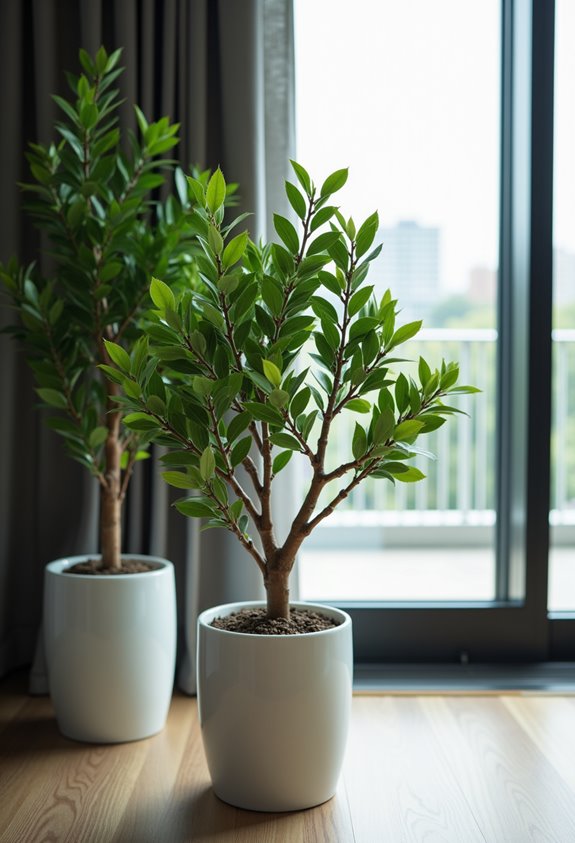
Although tree roots vary extensively by species, non-invasive roots generally remain within the tree’s canopy spread, which typically ranges from 10 to 25 feet in diameter depending on maturity. Non-invasive tree roots tend to have shallow root systems, reducing the risk of damage to nearby pavement or foundations. Decorative trees like English Holly exhibit a pyramidal growth shape and stable root patterns, making them suitable for planting close to structures. Compact tree species, including many dwarf varieties, feature less aggressive roots that minimize damage while enhancing landscape aesthetics. Additionally, trees such as Cryptomeria japonica Black Dragon offer pest resistance and low maintenance requirements, supporting long-term health without invasive root behavior. Selecting species with these root characteristics guarantees a safer, more attractive rental property landscape with fewer costly repairs. For apartment dwellers and landlords looking to brighten limited spaces, choosing compact artificial trees can offer stylish greenery without the concerns of invasive roots or soil disruption.
Benefits of Hinoki Cypress in Urban Landscapes

Hinoki Cypress (Chamaecyparis obtusa) is a widely valued evergreen tree in urban landscaping due to its slow growth and compact size. It grows slowly, reaching heights of 10 to 15 feet, making it suitable for confined spaces in rental properties. The dark green foliage enhances aesthetic value by providing year-round color without seasonal debris. Its non-invasive root system prevents structural issues often associated with aggressive trees near foundations. Hinoki Cypress thrives in full sun but tolerates partial shade, adapting well to various urban soils. Being pest-resistant, it requires minimal maintenance, reducing upkeep costs and environmental impact. These qualities make it a smart choice for landlords and property managers seeking durable, visually appealing greenery that won’t damage structures or demand frequent care in urban landscapes. Its compact size and maintenance-free nature are comparable to popular choices like Norfolk Pine used in indoor and outdoor apartment settings.
English Holly: Aesthetic Appeal and Maintenance Tips

English Holly (Ilex aquifolium) offers striking visual interest with its glossy dark green leaves and bright red berries. This tree features a classic pyramidal shape and grows between 15 to 50 feet tall. It thrives in USDA hardiness zones 5 to 9 and prefers full sun to partial shade, requiring well-drained soil for best results. Its low maintenance needs and pest-resistant qualities make it a reliable choice for landlords seeking durable greenery. The shiny dark green leaves remain visually appealing year-round, while the vibrant red berries provide seasonal color contrast. Overall, English Holly balances ornamental charm with practical upkeep, making it ideal for various landscaping designs without demanding frequent care or chemical treatments to maintain health and appearance. For interior or small spaces, landlords might also consider compact artificial trees as a low-maintenance alternative that adds greenery without risk of damage.
Choosing Trees for Limited Space and Close Proximity to Foundations

How can landlords effectively select trees for small yards near building foundations? Choosing slow-growing trees with non-aggressive root systems is critical for limited space and close proximity to foundations. Trees like English Holly, with its pyramidal shape, provide aesthetic value without risking foundation damage. Ornamental trees such as Hinoki Cypress and Cryptomeria japonica Black Dragon are ideal for urban settings because they remain compact and slow-growing. Maintaining at least five feet of distance from foundations minimizes structural risks. Species with extensive roots, including Oak, Ash, Poplar, Maple, and Sycamore, should be avoided near foundations due to their invasive nature. Thoughtful species selection guarantees that greenery beautifies limited spaces without causing unsightly marks or costly foundation repairs, balancing visual appeal and structural safety efficiently. Additionally, opting for compact trees can enhance small spaces without overwhelming them or risking property damage.
Best Practices for Planting and Caring for Landlord-Friendly Trees
Selecting the right tree species is only the beginning of effective landscaping in rental properties. Landlords should choose slow-growing trees like the Emerald Green Arborvitae, which minimizes structural risks due to its growth rate of less than one foot annually. Trees such as the Hinoki Cypress, with non-invasive root systems, are ideal near foundations. Maintaining a proper distance from structures—at least five feet—is crucial to prevent damage. Container gardening is another smart method, allowing trees like Sky Pencil Holly to be easily relocated or removed without harming the property. Consulting a landscape professional guarantees soil conditions are evaluated and selected trees comply with rental agreements. Regular monitoring of tree health and growth supports long-term maintenance and helps avoid costly repairs or disputes with tenants. For indoor rental spaces, artificial trees such as the 5FT Artificial Fiddle Leaf Fig Tree with LED Fairy Lights provide an attractive, low-maintenance alternative that requires no watering or pruning and enhances ambiance with built-in LED lighting options.
Frequently Asked Questions
What Are the Least Messy Evergreen Trees?
Evergreen varieties like Hinoki Cypress and Emerald Green Arborvitae exhibit minimal needle drop, compact space requirements, slow growth rate, low maintenance, strong pest resistance, adaptable soil and light needs, offering high visual appeal and year-round seasonal interest.
What Is the Best Landscaping Tree From the Front of a House?
The best landscaping tree for front yard aesthetics balances curb appeal enhancement, tree size considerations, and seasonal interest. Flowering, pest-resistant native tree varieties offer shade, visual privacy benefits, and low maintenance choices, ensuring lasting appeal and functionality.
Are There Privacy Trees That Don’t Lose Leaves?
Like nature’s steadfast sentinels, evergreen options serve as privacy hedges without leaf drop, offering wind resistance, shade benefits, noise reduction, pest resistance, and seasonal color. Their compact growth simplifies maintenance, making them ideal for consistent privacy.
What Trees Don’t Damage Concrete?
Trees with non-invasive root systems like Hinoki Cypress guarantee concrete compatibility. Careful tree selection, proper tree spacing, and suitable soil type support damage prevention. Minimal maintenance and controlled growth rates reduce interference issues, promoting landscape harmony.


