As an Amazon Associate, we earn from qualifying purchases. Some links on this site are affiliate links at no extra cost to you. Our recommendations are based on thorough research and editorial judgment.


How to Add Trees to a Rental Without Damaging Walls or Floors

Adding trees to rentals demands lightweight planters, ideally resin or fiberglass, sized to support root growth without floor strain. Use adhesive or suction hooks on clean, smooth walls for hanging under 5-pound pots, avoiding holes. Tension rods can suspend lightweight planters in window frames, saving space. Place waterproof trays under pots to catch leaks, and use cork pads to protect floors from scratches during moves. These approaches maintain plant health and interior surfaces integrity, with additional strategies available for careful installations.
Key Takeaways
- Use lightweight planters with cork pads or wheels to protect floors from scratches and allow easy relocation of trees without damage.
- Place trees in pots with drainage holes and waterproof trays to prevent water damage to floors.
- Opt for portable, floor-standing planters to avoid wall mounting and allow flexibility within rental spaces.
- Employ adhesive or suction hooks for lightweight hanging plants, ensuring surfaces are clean to prevent wall damage.
- Consider artificial trees or wall-mounted plant holders as low-maintenance, damage-free greenery alternatives.
Choose Lightweight Planters for Easy Mobility
You may be interested


When adding trees to a rental, lightweight planters offer significant advantages for mobility and floor protection. Planters made from materials like resin or fiberglass reduce weight while guaranteeing durability, facilitating easy mobility and preventing floor damage. Designs with handles or wheels enhance relocation without scratching floors, allowing renters to rearrange trees conveniently. Choosing sizes that accommodate root growth helps maintain plant health by providing sufficient space for roots to expand. Proper drainage holes are essential to avoid water damage and root rot, supporting overall plant health. Lightweight planters also allow quick adaptation of plant placement without permanent modifications to the rental space. By prioritizing these features, renters can guarantee their trees thrive safely and remain manageable within their living environment. Additionally, using maintenance-free artificial topiary trees can further simplify décor management for renters.
Utilize Adhesive Hooks for Hanging Plants

Although traditional hooks require drilling, adhesive hooks offer a renter-friendly alternative for hanging plants without damaging walls or ceilings. Brands like Command provide heavy-duty adhesive hooks capable of supporting lightweight planters up to 5 pounds, ideal for various plant types in rental homes. To maximize holding strength and avoid damage, thoroughly clean and dry the surface before application, then wait 24 hours to allow adhesive curing. These hooks enable vertical displays by suspending hanging plants or trailing vines, saving floor space while enhancing decor. When selecting adhesive hooks, consider the combined weight of the planter and moist soil, as excess load may cause failure. Used correctly, adhesive hooks maintain wall integrity, allowing renters to personalize spaces without permanent alterations or repairs. Additionally, incorporating faux trees can elevate the aesthetic without the worry of adding weight or requiring watering.
Employ Tension Rods to Support Tree Displays

Several types of tension rods can support hanging displays for smaller potted trees without damaging walls or floors. By installing tension rods between two sturdy vertical surfaces like window frames or doorways, tenants can suspend lightweight planters and hanging planters securely. It is important to select tension rods with an appropriate load capacity—typically rated for at least 15–20 pounds—to safely hold an indoor tree without sagging. This setup avoids wall damage by eliminating nails or screws, preserving rental conditions. Using tension rods also maximizes vertical space and promotes creative positioning, especially near bright windows where greenery thrives. This method enhances room aesthetics while maintaining structural integrity and allows renters to add natural elements without permanent modifications or risk to floors and walls. Additionally, selecting pre-assembled faux trees with stylish planters can simplify setup and complement this non-damaging display method.
Explore Suction Hooks for Non-Porous Surfaces

Suction hooks offer a versatile way to hang lightweight indoor trees on smooth surfaces like glass, tile, or metal. These hooks provide a damage-free solution ideal for renters, attaching firmly to non-porous surfaces without drilling or adhesives. Lightweight planters with built-in suction hooks create a space-saving option to add greenery where traditional mounting isn’t possible. To install correctly, the surface must be thoroughly cleaned and dried, ensuring a secure hold that can support smaller trees or heavy planters. Waiting 24 hours allows the suction to fully bond before hanging any weight. Suction hooks work best on flat, smooth materials, maximizing stability while protecting walls and floors from damage. This method combines practicality and convenience for temporary indoor tree displays. Additionally, using faux trees with lightweight designs enhances stability and ease of installation when paired with suction hooks.
Attach Plants Using G-Clamps on Frames and Archways
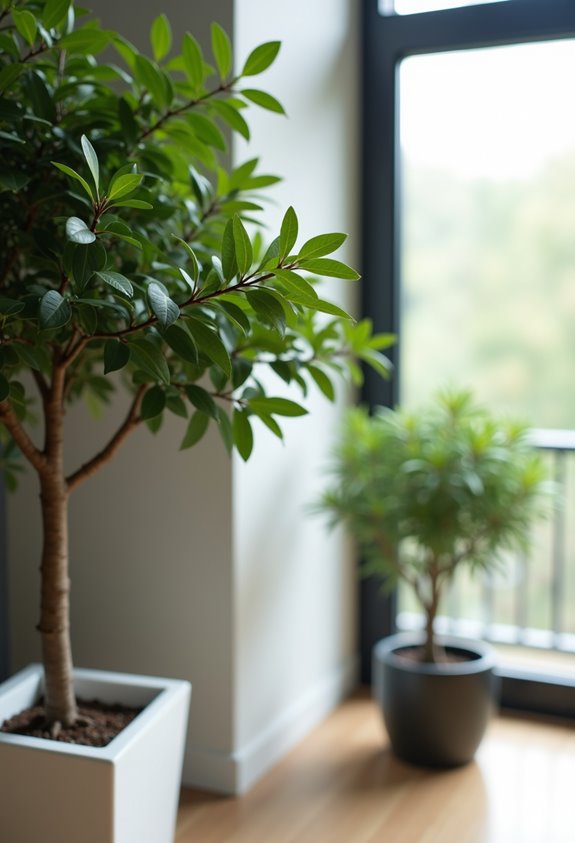
G-clamps provide a sturdy method for securing potted trees to window frames or archways without wall damage. These clamps attach plants by gripping the frame or archway edge tightly, avoiding nails or screws altogether. To protect surfaces, felt pads should be placed between the clamp and the wood or metal, preventing scratches or dents. Select a G-clamp sized to fit both the pot’s diameter and the thickness of the frame, ensuring a snug, secure hold. Position the plants where they receive ideal light, considering height and balance for hanging arrangements. Regularly check clamp tightness, as growing plants add weight that can loosen the grip over time. This method effectively secures plants while preventing damage and promoting a clean rental environment. For added privacy and a natural look, consider using artificial ivy privacy fence screens that are easy to install and require minimal maintenance.
Maximize Vertical Space With Freestanding Plant Stands
A variety of freestanding plant stands offer practical solutions for vertical gardening in rental spaces. These stands come in multiple heights and styles, allowing renters to maximize vertical space without wall mounting. Tiered designs accommodate several trees or larger plants within a compact footprint, enhancing natural light exposure for ideal growth. Many freestanding plant stands are lightweight and portable, making it easy to adjust arrangements without damaging floors. Choosing stands made from metal or wood provides stability, preventing accidental tipping. To protect flooring, stands often feature protective pads that prevent scuffs and scratches during movement. Elevating trees this way creates a visual dynamic that draws attention upward, enhancing room aesthetics while keeping rental walls intact. Overall, freestanding plant stands combine convenience, portability, and careful floor protection for successful indoor tree display. Choosing artificial trees in the ideal height range of 4-6 feet further complements this setup by balancing space optimization and aesthetic appeal.
Protect Floors and Surfaces With Waterproof Trays and Pads
Placing waterproof trays beneath indoor tree pots safeguards floors against moisture damage. These trays catch leaks from drainage holes, preventing water from seeping into surfaces. Cork pads serve as effective protective devices beneath heavy pots, shielding hardwood or delicate floors from scratches while allowing easy repositioning. It is important to select trays and pads that are large enough to cover potential leaks completely. Regular inspection for accumulated moisture within trays helps avoid mold or mildew buildup, which can compromise air quality and surface integrity. Choosing waterproof trays that are aesthetically pleasing guarantees they blend with home decor without sacrificing function. Combining these methods effectively protects floors around rental properties, balancing practical moisture control, physical protection, and subtle design enhancement for long-term preservation. Additionally, using artificial trees made from UV-resistant materials can further reduce risks associated with water damage and fading caused by sunlight exposure.
Frequently Asked Questions
Is There a Way to Hang Plants Without Drilling?
Yes, hanging solutions exist that avoid drilling altogether. Adhesive hooks, tension rods, suction cups, and removable stickers offer versatile options. Additionally, wire grids, plant shelves, wall-mounted planters, and decorative ladders provide creative non-invasive plant displays.
How to Put Things on the Wall in a Rental?
Removable adhesive wall hooks, command strips, and suction cups allow damage-free hanging. Picture ledges, wall grids, and tension rods offer versatile display options. Fabric wall art and decorative tapes enhance style without altering rental walls.
How to Hang Plants Without Damaging Walls?
Wall adhesive hooks and ceiling plant hangers offer renter friendly solutions to hang lightweight planters without damage. Creative plant displays like vertical gardens or wall mounted planters enhance indoor air purification while incorporating essential plant care tips.
How to Hang Plants From a Ceiling Renter Friendly?
Ceiling hooks, adhesive strips, removable clips, macrame hangers, plant ladders, tension rods, decorative brackets, suspending cables, and hanging shelves offer renter-friendly ways to suspend plants from ceilings without damage, providing stability, style, and easy removal options.


