As an Amazon Associate, we earn from qualifying purchases. Some links on this site are affiliate links at no extra cost to you. Our recommendations are based on thorough research and editorial judgment.


Creating a Mini Urban Forest on a Narrow Balcony

Creating a mini urban forest on a narrow balcony involves selecting vertical-growing plants, such as dwarf fruit trees in 15-gallon containers and climbing vines on trellises. Layering plants—tall species for shade, mid-height perennials, and low groundcovers—maximizes space and biodiversity. Incorporating edible herbs like basil and medicinal plants like thyme enhances utility. Vegetation improves microclimate by increasing humidity and reducing temperature. Routine pruning, organic fertilization, and drip irrigation support plant health. Further details explain optimizing plant combinations and maintenance techniques.
Key Takeaways
- Choose vertical-growing plants like climbing vines and dwarf fruit trees to maximize limited balcony space efficiently.
- Use layered planting with tall trees above, mid-height perennials, and low groundcovers for optimal growth and soil health.
- Incorporate edible and medicinal species to enhance biodiversity and provide ongoing yields with minimal replanting.
- Employ climbing plants and container trees to improve balcony microclimate by increasing shade, airflow, and humidity.
- Maintain with regular pruning, pest checks, organic fertilization, and efficient watering like drip systems for thriving greenery.
Selecting Suitable Plants for Limited Spaces
You may be interested
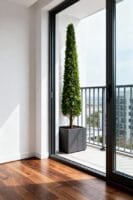


Although narrow balconies limit available ground space, selecting plants with vertical growth traits greatly expands gardening potential. Climbing plants, such as climbing beans or small fruiting vines, optimize vertical height on a small balcony, taking advantage of trellises or wire supports. Container-friendly herbs like basil, chives, and mint work well in pots ranging from 6 to 10 inches in diameter, offering fresh ingredients for cooking without crowding the space. Choosing dwarf or miniature fruit trees, including ‘Pixie’ apple or ‘Dwarf Meyer’ lemon, further maximizes space by producing fruit in containers under 15 gallons. Perennials like strawberries reduce annual planting effort while supplementing the harvest. Incorporating compact, vibrant flowering plants adds some seasonal color and attracts pollinators, enhancing biodiversity sustainably within tight spatial confines. For those seeking a hassle-free alternative, compact artificial trees provide realistic greenery with minimal maintenance, perfect for enhancing narrow balcony aesthetics.
Designing Layers for Maximum Growth

Maximizing a narrow balcony’s gardening potential relies on strategic layering of plants. Incorporating vertical growth is crucial for small gardens, using vertical planters to create multiple tiers in limited balcony areas. The design typically includes four layers: tall structural plants like dwarf fruit trees (mini cherry or pomegranate) at the top, which offer shade while maximizing height. Beneath, herbaceous plants such as perennials provide a mid-layer, reducing replanting needs and enabling year-round growth. Low-growing groundcovers form the next tier, protecting soil moisture and suppressing weeds. Deep-rooted plants occupy the base layer, stabilizing the soil and improving nutrient cycling. Regular pruning facilitates proper airflow and sunlight penetration to all layers, maintaining plant health and optimizing the available vertical space within this confined urban setting. Incorporating narrow artificial trees can further enhance greenery while saving space and reducing maintenance needs.
Incorporating Edible and Medicinal Species

When selecting plants for a mini urban forest, edible and medicinal species offer practical benefits alongside ecological value. Edible species such as perpetual leeks, sweet potato leaves, and kale flowers enhance biodiversity while supplying nutritious food. Medicinal plants like lavender, yarrow, and thyme contribute therapeutic properties and attract pollinators that support ecosystem health. Choosing perennial varieties reduces replanting frequency, ensuring ongoing yields and simplifying maintenance. Vertical layering techniques optimize limited balcony space, permitting a diverse mix of herbs, vegetables, and flowers to thrive together harmoniously. Incorporating organic compost improves soil nutrient content, promoting vigorous plant development. Together, these practices create a multifunctional, resilient mini forest that balances food production, wellness benefits, and biological diversity within a compact urban setting. This approach is especially effective for balconies under two square meters with partial sunlight. Utilizing UV and weather-resistant materials ensures any added artificial elements maintain durability and appearance over time.
Enhancing Balcony Microclimate With Vegetation

How can vegetation improve the microclimate of a narrow balcony? Climbing plants like wisteria create shade, reducing surface temperatures by up to 10°F during peak sunlight hours. Strategically placing small trees in containers enhances airflow and retains moisture, which cools the surrounding space and supports plant health. Vertical greenery or living walls boost humidity levels, maintaining a balanced microclimate beneficial to both plants and residents. Including diverse species, such as perennial herbs and flowers, contributes to better air quality by absorbing carbon dioxide and moderating temperature fluctuations. Efficient irrigation systems, like drip irrigation, deliver water directly to plant roots, minimizing evaporation and sustaining humidity. Altogether, these vegetation strategies effectively transform small balconies into cooler, healthier spaces with more stable microclimate conditions. Additionally, selecting compact faux plants can maintain greenery year-round while requiring minimal maintenance.
Maintenance Tips for Thriving Mini Forests

Maintaining a healthy mini urban forest requires regular attention to plant health and environmental conditions. Consistent maintenance includes routine inspections for pests and diseases to prevent infestations from spreading quickly. Pruning is important every few weeks to improve air circulation and light penetration, promoting healthy growth and reducing mold risks. A reliable watering schedule should be followed using self-watering pots or drip irrigation systems to avoid over- or under-watering in tight spaces. Organic slow-release fertilizer applied every 2-3 months guarantees adequate nutrients without overwhelming the compact environment. Additionally, promptly removing weeds reduces resource competition, supporting ideal plant development. Using UV and water-resistant materials in planters or decorative elements can enhance the durability of your balcony forest in outdoor conditions. These targeted maintenance practices collectively sustain a healthy mini forest’s liveliness and resilience, guaranteeing a flourishing urban oasis on narrow balconies.
Frequently Asked Questions
How to Style a Narrow Balcony?
Styling a narrow balcony involves selecting compact balcony furniture, implementing vertical gardening to maximize greenery, and adding outdoor lighting to create ambiance. These elements enhance functionality and aesthetics without overcrowding limited space.
What Are Those Tiny Balconies Called?
Tiny balconies are famously dubbed “Juliet balconies,” epitomizing the ultimate challenge for tiny balcony concepts. Their narrow space demands vertical gardening techniques and space-saving furniture to transform mere railings into verdant urban sanctuaries.
Which Plants Offer Privacy on a Balcony?
Tall privacy plants like ornamental grasses, compact evergreen options such as dwarf holly, and climbing plants on trellises serve as effective balcony screening ideas. Combining heights maximizes privacy while preserving usable balcony space efficiently.
What Is the Smallest Balcony Size?
A cozy nook no less than four square meters serves as the smallest balcony size. This space invites balcony gardening through careful space optimization and selecting small plant choices, allowing greenery to thrive without overwhelming limited quarters.


