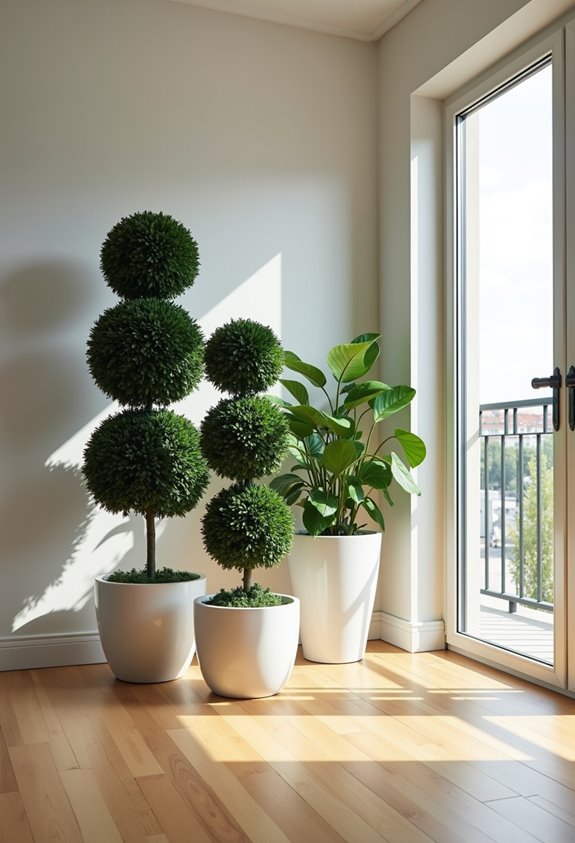
As an Amazon Associate, we earn from qualifying purchases. Some links on this site are affiliate links at no extra cost to you. Our recommendations are based on thorough research and editorial judgment.


The Best Indoor Conditions for Healthy Topiary Trees

Indoor topiary trees require 4 to 6 hours of direct sunlight daily for healthy photosynthesis and dense foliage development. Maintaining humidity between 40% and 60% optimizes leaf hydration while proper air circulation reduces pest and fungal issues. Use well-draining soil mixed with Perlite in pots 6 to 12 inches wider than the root ball, ensuring drainage holes prevent root rot. Water thoroughly every two to three days and fertilize monthly during active growth. Further insights explore pruning, pest control, and seasonal care.
Key Takeaways
- Provide 4 to 6 hours of direct sunlight daily and rotate topiary every few days for even growth and vibrant foliage.
- Maintain indoor humidity between 40% to 60%, using weekly misting and humidity trays to support moisture balance.
- Water thoroughly every 2-3 days, ensuring well-drained soil and pots with drainage holes to prevent root rot.
- Fertilize monthly from March to September with a balanced, water-soluble fertilizer, pausing during winter dormancy.
- Monitor for pests regularly, using insecticidal soap or beneficial insects, and quarantine new plants for two weeks.
Essential Lighting for Indoor Topiary
You may be interested


Proper lighting is fundamental for indoor topiary health and appearance. Crucial lighting for indoor topiary involves providing several hours of direct sunlight daily, ideally four to six hours. During winter, sustaining at least a few hours of direct sunlight remains important to prevent stress and maintain growth. To guarantee even development and avoid uneven foliage, rotating the topiary every few days is recommended, allowing all sides to receive sufficient light. Exposure to low-light conditions should be limited to no more than two days, as prolonged shading can weaken the plant’s structure and overall vigor. Consistently returning indoor topiary to bright, sunny windows supports photosynthesis and keeps the foliage dense and vibrant throughout the year, optimizing health and ornamental value. Additionally, using UV-resistant materials can help maintain the topiary’s vibrant appearance even in varying light conditions.
Ideal Humidity Levels and Air Circulation

While adequate lighting supports photosynthesis and growth, moisture balance within the indoor environment is equally important for topiary health. Indoor topiary trees thrive when humidity levels remain between 40% and 60%, which helps prevent leaf drop and stress. During dry winter months, weekly misting can raise humidity without saturating the soil. Utilizing a humidity tray with water and pebbles beneath the pot additionally sustains moisture levels effectively. Proper air circulation is essential to reduce fungal risks and discourage pests; stagnant air invites problems. Placing the topiary near an open window or using a small fan can guarantee steady airflow and support plant vigor. Combining ideal humidity levels with adequate air circulation creates a balanced environment for healthy, attractive indoor topiary trees. Additionally, selecting plants made from durable, UV-resistant materials ensures longevity and reduces maintenance needs in your indoor environment.
Choosing the Right Pot and Soil Mix

Selecting an appropriate pot and soil mix is vital for indoor topiary health. A pot 6-12 inches wider than the root ball offers sufficient room for root expansion and prevents crowding. Proper drainage holes in the pot are essential to avoid waterlogging, which can cause root rot. A well-draining soil mix that balances moisture retention and drainage is recommended. Adding Perlite improves aeration and prevents excess water retention. Heavier pots help stabilize taller topiary trees, reducing the risk of tipping indoors. Monitoring soil moisture regularly is important to maintain consistent humidity in the root zone. Adjusting care based on the specific pot and soil mix guarantees healthy growth without overwatering or drying out the plant’s root system. This careful selection supports robust indoor topiary development. Additionally, choosing a pot with a weighted base can enhance stability, especially for taller indoor topiary trees.
Watering Techniques for Optimal Growth

Effective moisture management begins with thoroughly wetting the soil until water drains freely from the pot’s bottom. Applying correct watering techniques guarantees an evergreen shrub remains healthy by preventing root rot and stress caused by over- or underwatering. It is essential to avoid letting the plant sit in a saucer filled with water, as stagnant moisture damages roots. Soil moisture should be checked every two to three days, adjusting frequency based on seasonal indoor climate fluctuations. Incorporating Perlite within the soil promotes drainage and aeration, reducing excess water retention. In dry indoor air, misting might supplement hydration, but it should be avoided in high humidity to minimize fungal risks. Maintaining consistently moist, well-drained soil supports vigorous growth and longevity for indoor topiary trees. Additionally, using faux topiary trees that are constructed from durable, UV-resistant materials can significantly reduce maintenance related to watering and soil care.
Fertilizing Indoor Topiary Trees
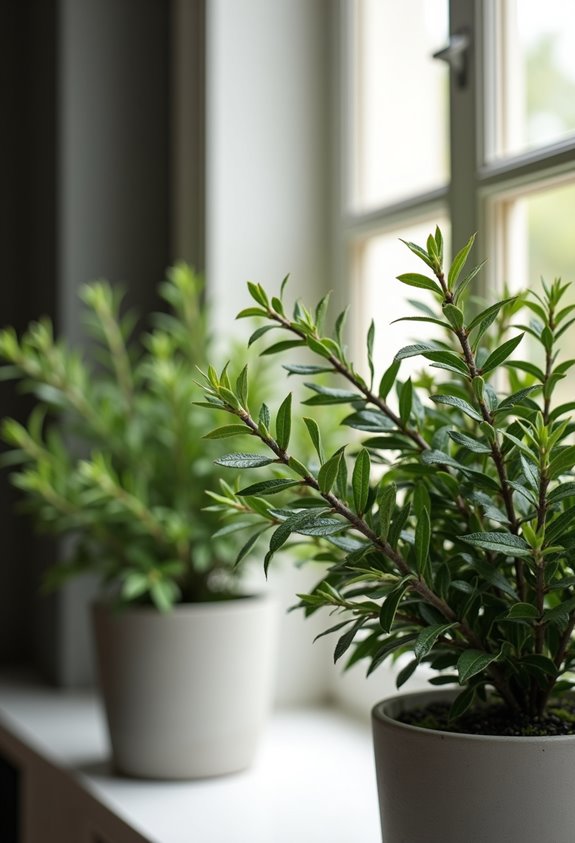
Because indoor topiary trees enter a dormant phase in winter, fertilization should pause during this time to prevent nutrient buildup. Fertilizing indoor topiary trees once a month from March through September supports active growth. Use a well-balanced, water-soluble fertilizer, ideally with equal parts nitrogen, phosphorus, and potassium (e.g., 10-10-10), to maintain consistent nutrient levels. Over-fertilization can harm roots, so avoid feeding during dormancy. Monitoring growth patterns helps decide if additional feeding is necessary. Adjust fertilizer concentration or frequency if growth slows or foliage discolors. Proper nutrient levels guarantee strong structural development and vibrant foliage. Applying fertilizer after watering improves absorption and reduces root stress. Maintaining this fertilization schedule supports indoor topiary trees’ overall health and resilience without risking nutrient toxicity or deficiency. Additionally, since artificial topiaries require no fertilizer, ensure you verify if your plant is real before applying nutrients.
Pruning Strategies to Maintain Shape
Maintaining the precise shape of indoor topiary trees requires pruning approximately every two weeks using sharp scissors or specialized clippers. Effective pruning strategies include removing half to three-quarters of new growth to support dense, healthy form retention. For MYRTLE TOPIARY, trimming stray branches promptly prevents uneven growth and promotes a compact silhouette. Using a lazy Susan can facilitate access to all sides, enabling consistent shaping without stressing the plant. Pruning frequency should increase during active growth seasons to maintain design integrity. Adjustments depend on individual growth patterns, emphasizing careful observation. Employing these precise pruning strategies guarantees the indoor topiary remains visually appealing and structurally balanced over time, optimizing both aesthetics and plant health under controlled indoor conditions. For enhanced maintenance, integrating UV-resistant materials in surrounding decor or support structures can also protect your plants from indoor light damage.
Managing Temperature and Avoiding Drafts
How does temperature control impact the significance of indoor topiary trees? Managing temperature within 65°F to 75°F (18°C to 24°C) is essential to sustain healthy growth. Sudden fluctuations, especially near windows, doors, or air conditioning vents, cause stress and hamper development. Avoiding drafts helps maintain a stable environment. It is advisable to keep topiaries away from radiators and heated appliances, which may excessively dry foliage despite soil remaining evenly moist. Monitoring temperature with a reliable thermometer guarantees conditions remain consistent. Additionally, dry indoor air during winter can dehydrate plants; using a humidity tray or humidifier helps maintain appropriate moisture levels. Overall, stable temperatures combined with evenly moist soil optimize health, preserving both the shape and foliage of indoor topiary trees. Selecting topiary trees with durable silk leaves can also reduce stress effects from environmental changes by ensuring consistent appearance and minimal maintenance.
Preventing and Treating Common Pests
Which pests commonly threaten indoor topiary trees? Spider mites, aphids, and mealybugs frequently infest these plants and damage evergreen shrubs by feeding on foliage. Regularly inspecting topiary is crucial to detect early pest infestations and prevent extensive harm. Quarantining new plants for two weeks minimizes the risk of spreading pests to established trees. Introducing beneficial insects such as ladybugs or lacewings can naturally control pest populations without chemical use. When infestations occur, treating with insecticidal soap or neem oil applied thoroughly to affected areas guarantees effective eradication. Maintaining indoor humidity between 40%-60% reduces plant stress, making evergreens less vulnerable. Additionally, using UV-resistant materials in artificial topiary can help avoid pest issues altogether. Combined, these strategies help sustain healthy topiary trees by controlling pests methodically and preserving their aesthetic and structural quality indoors.
Tips for Seasonal Indoor Care Adjustments
Because indoor topiary trees experience seasonal changes, care routines must adjust accordingly. In winter, these topiaries should receive a few hours of direct sunlight daily to sustain health and vigor. Rotating plants every few days prevents uneven growth by promoting uniform light exposure. Watering frequency typically follows a steady pattern; water every two to three days while regularly checking soil moisture to avoid saturation. Monitoring humidity levels is essential, especially during dry winter months, when indoor heating reduces moisture. Weekly misting supports ideal humidity for foliage health. Fertilizing occurs monthly during the active growing season, from March to September, using a balanced, water-soluble fertilizer. During winter, fertilization ceases to prevent undue stress. Adjustments in watering and humidity management are critical to maintaining indoor topiary well-being through seasonal changes. Faux trees require no maintenance, making them an alternative for low-effort greenery where care adjustments are challenging.
Frequently Asked Questions
How to Care for an Indoor Topiary?
Caring for an indoor topiary demands flawless pruning techniques, as if sculpting a masterpiece, alongside meticulous soil requirements—moist but never drowning—ensuring your leafy art thrives without turning into a wilting, neglected green blob.
How Often Should I Water Topiary Trees?
Watering frequency for topiary trees is typically every two to three days, ensuring soil moisture remains evenly balanced. The soil should be consistently monitored and thoroughly soaked to avoid dryness or sogginess, supporting healthy growth.
How to Care for Topiary Trees in Pots?
Like Michelangelo sculpting marble, container gardening of topiary trees demands precise pruning techniques, regular rotation for balanced light, consistent moisture without waterlogging, and seasonal fertilization to nurture their artful shapes into living masterpieces.
Are Topiaries Hard to Keep Alive?
Topiaries are moderately challenging to keep alive, as many topiary varieties require careful attention to indoor humidity and consistent care. Proper moisture, light, and pruning are essential to prevent stress and maintain their health indoors.