As an Amazon Associate, we earn from qualifying purchases. Some links on this site are affiliate links at no extra cost to you. Our recommendations are based on thorough research and editorial judgment.


Trees That Tolerate Occasional Neglect in Small Spaces

Trees tolerant of occasional neglect thrive in small spaces with minimal care. Japanese Maples grow 6-10 feet tall, preferring well-draining soil and moderate moisture. Loquat Trees suit sunny areas, reaching up to 30 feet but manageable by pruning. Compact conifers like Mugo Pine and Alberta Spruce provide evergreen interest with low watering. Strawberry Trees offer unique blooms and drought resilience. These species balance size, durability, and aesthetics, ideal for limited urban yards. Additional insights explore maintenance and practical selection criteria.
Key Takeaways
- Japanese Maples and Loquat Trees thrive with minimal care and fit well in small urban gardens due to their manageable size.
- Dwarf conifers like Alberta Spruce and Mugo Pine provide year-round visual interest with low water and maintenance needs.
- Strawberry Trees and Crape Myrtle tolerate drought and occasional neglect while producing attractive flowers and fruits.
- Small dogwood varieties such as Cherokee Chief adapt well to limited space and require minimal pruning.
- Pruning in late winter and deep watering during the first year optimize growth without intensive upkeep.
Japanese Maples: Elegance With Minimal Care
You may be interested


Why choose Japanese Maples for small garden spaces? Japanese Maples are small trees renowned for their elegance and manageable size. Their dwarf varieties typically grow between 6 to 10 feet tall, making them well-suited for compact yards and containers. These trees prefer well-draining soil with consistent moisture but tolerate occasional neglect, reducing maintenance demands. Japanese Maples thrive in USDA hardiness zones 5 to 8 and adapt to sunny or part-shade locations, offering versatile planting options. Minimal care is sufficient once they establish, requiring little pruning while maintaining aesthetic appeal. Popular cultivars like Bloodgood feature striking crimson foliage, and weeping forms such as Crimson Queen add visual interest. Overall, these resilient, elegant trees provide beauty and practicality in small garden environments with minimal care required. Additionally, choosing trees with low-maintenance options can further simplify care routines while enhancing garden aesthetics.
The Durable Loquat Tree for Sun-Soaked Yards

Following the elegance of Japanese Maples, the Loquat tree offers durability suited for bright, sun-exposed gardens. Adapted to USDA zones 8-10, the Loquat thrives in sun-soaked yards and withstands drought effectively. Its evergreen nature features dense, glossy foliage, adding year-round appeal with minimal maintenance required after establishment. Typically reaching up to 30 feet, it is manageable in small spaces when potted or pruned annually in early spring. This pruning promotes compact growth, suitable for tight urban yards. Additionally, the tree produces fragrant flowers and sweet, edible fruit from late spring to early summer, enriching both aesthetics and utility. Its resilience under occasional neglect makes it ideal for gardeners seeking a low-effort, attractive tree option for small, bright locations without sacrificing landscape quality. For balcony or small space use, selecting a tree height around 3 to 6 feet ensures a perfect balance of size and space.
Pine Species: Evergreen Options for Low Maintenance
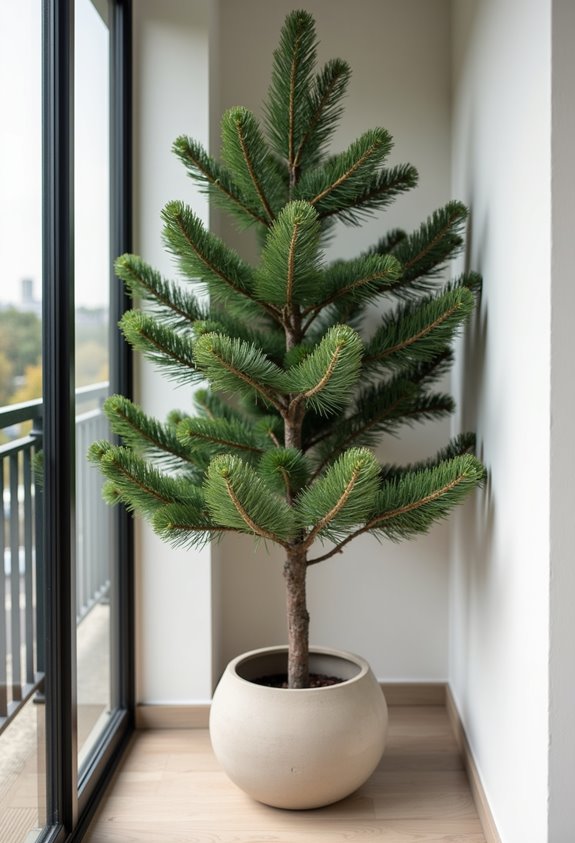
Although many pine species grow tall, several offer compact forms suitable for small spaces. The Mugo pine (Pinus mugo) is a dwarf option, hardy to zone 3, with slow growth reducing pruning requirements. Eastern white pine (Pinus strobus) adapts well to varied soils and fits confined areas despite its taller potential. Loblolly pine (Pinus taeda) thrives in wet soils, needing minimal care, making it ideal for low maintenance landscapes. Evergreen options like Ponderosa and Western white pines provide year-round greenery and tolerate occasional neglect. These pine species enhance small yards and urban gardens with attractive structure and minimal grooming needs. Understanding hardiness zone suitability helps select pines that endure specific climates while maintaining evergreen foliage consistently throughout the year. For indoor holiday decor, consider slim-profile flocked narrow Christmas trees that bring a wintery touch without taking up much space.
Strawberry Trees: Unique and Hardy Small Trees

The Strawberry Tree (Arbutus unedo) is a hardy, compact tree suited for small gardens. It thrives in USDA zones 7 to 10, tolerating drought conditions once established. Ideal for full sun and sheltered spots, this hardy option requires minimal care. Growing up to 25 feet tall, it maintains a manageable size for limited spaces and adapts well to container cultivation. The tree produces ornamental white flowers in the fall, enhancing aesthetic appeal with seasonal interest. Following the flowering period, edible red fruits appear in summer, adding unique value. Its resilience to extreme temperatures and low water needs make the strawberry tree reliable for gardeners who prefer low maintenance. Overall, it combines versatility, durability, and visual interest within compact outdoor areas. When selecting trees for confined spaces, it’s important to consider their light requirements and placement to ensure healthy growth in small gardens.
Dogwood Varieties Suited for Compact Spaces

When selecting dogwood varieties for compact garden spaces, Cornus florida Cherokee Chief and Pacific dogwood (Cornus nuttallii) stand out for their adaptability and ornamental appeal. These dogwood trees typically reach heights between 15 to 30 feet, balancing presence without overwhelming small yards. Cherokee Chief offers abundant spring flowers and striking fall color, enhancing seasonal interest. Pacific dogwood thrives in shaded or part-sun locations within zones 7 to 9, producing more blooms under these conditions. Both varieties require minimal maintenance, primarily occasional watering during establishment, qualifying them as low-maintenance options. Additionally, their appeal extends to wildlife and pollinators, supporting ecological diversity in tight spaces. This combination of manageable size, vibrant seasonal display, and adaptability makes these dogwoods practical for gardeners seeking small, tall, ornamental trees with year-round benefits. When incorporating these trees into small spaces, maintaining a minimum spacing of 3 feet is crucial for optimal growth and health.
Serviceberry: Perfect for Small Garden Settings
Serviceberry trees offer a versatile option for small garden landscapes, growing between 15 to 25 feet tall. Adapted for small spaces, these trees provide year-round decorative aesthetics, making them a practical choice in confined areas. In spring, Serviceberry produces clusters of delicate white flowers that attract pollinators and enhance visual appeal. By summer, edible berries develop, suitable for wildlife or light harvesting. Their vibrant fall foliage ranges from yellow to red, adding seasonal color contrast. Thriving in hardiness zones 4 to 9, Serviceberries tolerate a variety of soil types and urban conditions, requiring minimal upkeep apart from moderate watering and feeding during growth periods. Their resilience and manageable size make them ideal for garden beds, patios, or small yards where space and care time may be limited. Their compact size makes them especially suitable for spaces where a slim profile is preferred.
Compact Flowering Trees That Require Little Attention
Several compact flowering trees combine manageable size with minimal care needs, making them suitable for limited garden spaces. The Snow Fountains® Weeping Cherry is a dwarf tree growing up to 15 feet tall and 8 feet wide, prized for its low-maintenance white blooms in spring. Prairifire Crabapple reaches 15-20 feet with deep-pink flowers and minimal fruit drop, reducing upkeep in compact spaces. Flame Thrower® Redbud offers light-pink blooms and colorful foliage, requiring limited attention while providing strong aesthetic appeal. The Kousa Dogwood, hardy in USDA zones 5–8, can grow 15-30 feet, delivering seasonal interest with minimal maintenance. Overall, these flowering trees thrive with basic watering and occasional feeding, demonstrating how manageable size and beauty coincide in small gardens with low care demands. In addition, choosing trees with well-drained soil requirements enhances their health and reduces maintenance challenges.
Best Small Conifers for Year-Round Interest
A variety of small conifers provide reliable, year-round visual interest in compact landscapes. Dwarf varieties like the Alberta Spruce, which grows 5 to 8 feet tall, retain a neat conical shape without shearing, making it a low-maintenance option. The Mugo Pine’s slow growth, reaching only 2 to 5 feet, suits compact spaces with minimal pruning. Hinoki Cypress offers dense, soft foliage, thriving 5 to 12 feet high in moderate climates, adding year-round interest. For softer texture, the Dwarf Eastern White Pine grows 3 to 5 feet, ideal for trees for small spaces. Blue Star Juniper, at 2 to 3 feet, displays striking blue-gray foliage and tolerates drought well, perfect for low-maintenance compact gardens. Additionally, dense foliage in small conifers ensures easy maintenance and lasting visual appeal throughout the year.
Trees With Striking Foliage and Low Water Needs
While small conifers offer year-round greenery, many hardwoods and broadleaf trees bring striking foliage and drought resilience to compact gardens. The Japanese Maple, a standout for small spaces, displays vibrant hues from green-gold to fiery red and requires only moderate watering once established. Dwarf varieties like the Mugo Pine combine compact size with rich evergreen foliage and low water needs. Similarly, the Crape Myrtle provides summer flowers and colorful, bronze-hued autumn leaves while tolerating dry conditions well. Other notable trees include the Eastern Redbud, which has heart-shaped leaves and reddish-purple spring flowers, needing minimal irrigation after establishment. Serviceberry also deserves mention for attractive spring blooms and fall colors, coupled with exceptional drought tolerance, making these species practical and visually appealing choices for gardens requiring occasional neglect. Choosing trees with manageable root systems further ensures they thrive without damaging urban infrastructure in small spaces.
Pruning and Feeding Tips for Neglect-Tolerant Trees
When managing neglect-tolerant trees like Japanese Maple and Serviceberry, pruning in late winter or early spring is ideal. This timing helps maintain shape and encourages healthy new growth without extensive upkeep. Feeding these trees moderately in early spring with a balanced 10-10-10 fertilizer supports development but avoids nutrient overload. Deep watering during the first year strengthens the root system, reducing future irrigation needs. Low-maintenance trees like Crape Myrtle require minimal pruning, mostly to remove dead or damaged branches. Regularly monitor for pests and diseases each season, as early detection prevents escalation. Overall, consistent yet moderate pruning and feeding promote vigor in neglect-tolerant trees placed in small spaces, optimizing their resilience without demanding high maintenance routines or constant attention. For those looking to enhance small outdoor areas, adding UV-resistant artificial potted trees can provide year-round greenery without the need for frequent care.
Frequently Asked Questions
What Trees Do Well in Small Spaces?
Suitable trees for small spaces include slow-growing, compact evergreens and miniature fruit varieties ideal for urban gardening. Decorative foliage trees also thrive in container gardening, providing aesthetic appeal alongside functional greenery in limited areas.
What Is the Least Maintenance Tree?
A stitch in time saves nine; the Loquat stands out among low care options due to its drought resistant varieties, compact growth habits, pest resilient species traits, environmental adaptability, and offering of seasonal interest for hassle-free maintenance.
Are There Any Indoor Trees That Don’t Need Sunlight?
Certain hardy indoor plants like the ZZ Plant and Snake Plant qualify as low light trees, requiring minimal sunlight. These apartment friendly, drought resistant species also offer air purifying benefits, making them ideal for indoor plant care with limited light.
Which Type of Tree Is Best Suited for Poor Dry Soils?
Clearly, only a cactus could thrive in poor dry soils, but drought tolerant trees like Mugo Pine or Serviceberry excel by applying xeriscaping principles and native plant species, meeting tree selection criteria and boosting environmental benefits without futile soil improvement techniques.


