As an Amazon Associate, we earn from qualifying purchases. Some links on this site are affiliate links at no extra cost to you. Our recommendations are based on thorough research and editorial judgment.

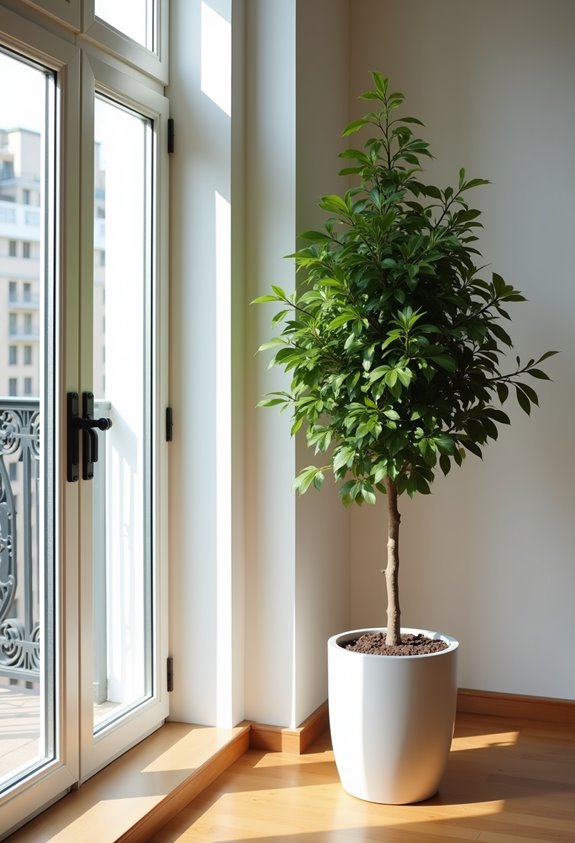
Questions to Ask Yourself Before Buying Your First Indoor Tree

Before buying an indoor tree, measure available space precisely, including ceiling height above 6 feet and floor width for stability. Assess natural light levels in window proximity; most species require medium, indirect sunlight to avoid leaf scorch. Calculate weekly care time—low-maintenance trees reduce workload considerably. Verify pet and child safety by consulting toxicity resources to avoid harmful species. Consider mature size carefully to prevent overcrowding and match aesthetic preferences. Understanding these factors enhances long-term success and health. Further details help optimize tree selection.
Key Takeaways
- How much space do I have to accommodate the tree’s mature size without overcrowding my room?
- What are the lighting conditions where I plan to place the tree throughout the day?
- How much time can I realistically dedicate to watering, pruning, and overall tree care?
- Are the tree species I’m considering safe for my pets and children?
- What growth rate and aesthetic style suit my preferences and room design?
What Space Is Available for Your Indoor Tree?
You may be interested


Before selecting an indoor tree, carefully measure the available space, including height, width, and floor area. Accurate measurements guarantee the tree accommodates growth without overcrowding the room. Consider the tree’s mature size, allowing sufficient room for maintenance and watering activities. The proximity to windows is essential, as light influences growth, but the tree should not block key sightlines or reduce natural light for others. Evaluate temperature variations near vents or drafts that could affect the tree’s health—attention to these subtle factors shows humility towards plant care. Indoor trees need balance between their size and the designated space to avoid overwhelming the environment. Planning this space thoughtfully creates harmony, assuring the indoor tree fits comfortably within the light conditions and physical limits of the room. For apartments or smaller spaces, selecting trees that are 3-6 feet tall ensures an optimal fit without consuming too much room.
What Are the Lighting Conditions in Your Home?

Evaluating available space involves more than just physical dimensions; lighting conditions must also be considered meticulously. Indoor plants have varying light requirements depending on species. Some tropical trees thrive in bright light, ideally filtered sunlight from east or south-facing windows, while others tolerate low light, such as those near north-facing windows or shaded areas. Observing light intensity throughout the day helps identify suitable spots for placement. Excessive direct sunlight can scorch leaves, so indirect bright light is often preferable. If natural light is insufficient, especially during shorter winter days, artificial grow lights with specific spectra can supplement light levels. Meticulously matching an indoor tree’s light needs to a home’s conditions guarantees healthy growth and prevents weakened foliage caused by inadequate or excessive light exposure. Considering UV and weather resistance can also be important when selecting trees that may be placed near windows or doors where sunlight and outdoor elements affect their longevity.
How Much Time Can You Dedicate to Tree Care?

How much time can realistically be allocated for indoor tree care each day, week, and month? Reviewing one’s schedule is essential to consistently dedicate time for watering, feeding, pruning, and inspecting for pests. Indoor plants vary widely in their maintenance demands; some species need only a few minutes weekly, while others, such as Citrus trees, require several hours of attentive care. Commitment to care includes planning for absences, either by arranging caregiving or choosing low-maintenance trees. Analyzing personal willingness to adapt routines guarantees the tree’s health and longevity. Understanding specific maintenance requirements guides realistic expectations. Proper time allocation reflects the level of commitment necessary to maintain an indoor plant successfully, balancing daily, weekly, and monthly tasks to meet its care needs without neglect. For those seeking a hassle-free alternative, maintenance-free topiary trees provide year-round greenery without requiring watering or pruning.
Are There Pets or Children in the Household?

What safety considerations arise with pets or children at home? Choosing indoor trees requires evaluating toxicity risks, as some popular species like Fiddle Leaf Figs and Rubber Trees are toxic to pets. Pet owners should consult the ASPCA’s database, which categorizes plants as toxic or non-toxic. Selecting non-toxic trees such as the Parlor Palm or Money Tree enhances a safe environment. Education plays a critical role; children must learn not to touch or ingest unfamiliar plants to avoid poisoning. It is advisable to arrange plants in designated spaces that are out of reach of pets and children, reducing accidental exposure. This approach balances the benefits of indoor greenery with responsible safety protocols tailored for households with vulnerable individuals like pets or young children. Additionally, choosing low-maintenance artificial plants can provide greenery without toxicity concerns in such environments.
What Size and Growth Potential Do You Prefer?

Where does the indoor tree fit within the vertical and horizontal space of the room? Indoor trees vary widely in size, from 2 feet tall Parlor Palms to Fiddle Leaf Figs exceeding 10 feet. Considering the mature size of a tree is essential, as species like Rubber Trees or Norfolk Island Pines may demand significant space as they grow. The growth rate also affects space planning: quick growers like Banana Trees require sooner reassessment of their surroundings compared to slower ones. Additionally, some indoor trees, such as Umbrella Trees, develop broad branching that impacts horizontal space. Buyers should decide if they prefer a compact tree suitable for small rooms or a larger specimen to fill substantial space and make a design statement. Understanding the expected size and growth helps match the tree selection to available space effectively. Selecting trees with appropriate growth space requirements ensures they thrive without overcrowding the room.
How Humid Is Your Indoor Environment?
Why consider indoor humidity levels when selecting a tree? Many tropical plants, such as Fiddle Leaf Figs and Rubber Trees, require humidity levels around 50% or higher to thrive. Indoor gardeners should measure home humidity using a hygrometer; levels below 30% often indicate dryness harmful to moisture-loving trees. In dry, winter months, low humidity can cause brown leaf edges and drooping. If the indoor environment is dry, adding a humidity tray beneath the plant pot or using a humidifier helps maintain ideal moisture. Verify natural humidity sources in your home, like kitchens or bathrooms, as they may create a more suitable environment for tropical plants. Evaluating humidity before purchase guarantees the chosen tree will adapt well and remain healthy indoors. Choosing plants suited to your indoor environment ensures better growth and reduces maintenance efforts.
What Aesthetic and Style Do You Desire?
How can indoor trees enhance a room’s design? Selecting indoor trees involves evaluating aesthetic preferences like unique foliage colors, textures, or blooms. Consider design styles—modern, bohemian, or minimalist—to guarantee the tree harmonizes decor and complements the room’s theme. Measuring tree height and canopy spread is critical; for example, a Fiddle Leaf Fig can reach 6 feet, serving as a focal point. Smaller trees, around 3 feet tall, suit subtler layouts. Research growth patterns to foresee the tree’s spatial fit and maintenance needs. Visual references from social media and plant guides help imagine the tree’s impact on ambiance. Thoughtful selection aligns both form and function, integrating indoor trees seamlessly with existing interiors while enhancing visual appeal and spatial harmony. Additionally, opting for maintenance-free varieties can simplify upkeep and ensure your indoor tree remains vibrant without extra care.
Frequently Asked Questions
What Is the Best Indoor Tree for Beginners?
The best beginner trees include the Rubber Tree and Money Tree, both low maintenance options favored for air purifying qualities. Considering tree care tips and aesthetic considerations guarantees new owners select suitable, attractive plants enhancing indoor spaces effectively.
What Are the 7 Important Things to Consider in Growing an Indoor Plant?
How can one guarantee thriving growth? Essential considerations include understanding light requirements, proper watering frequency, selecting suitable soil types, monitoring humidity, guaranteeing effective pest management, verifying space availability, and committing to consistent plant care routines for indoor plants.
What’s the Hardest Houseplant to Keep Alive?
The hardest houseplant to keep alive is often the Citrus Tree due to its strict humidity requirements, need for precise soil selection, pest management, pruning techniques, and inadequate low light options, making it challenging for most indoor environments.
How to Pick an Indoor Tree?
To pick an indoor tree, one should assess light requirements, humidity levels, and potting options while considering indoor tree maintenance and pest control. Matching these factors guarantees healthy growth and ease of care in the chosen environment.


