As an Amazon Associate, we earn from qualifying purchases. Some links on this site are affiliate links at no extra cost to you. Our recommendations are based on thorough research and editorial judgment.

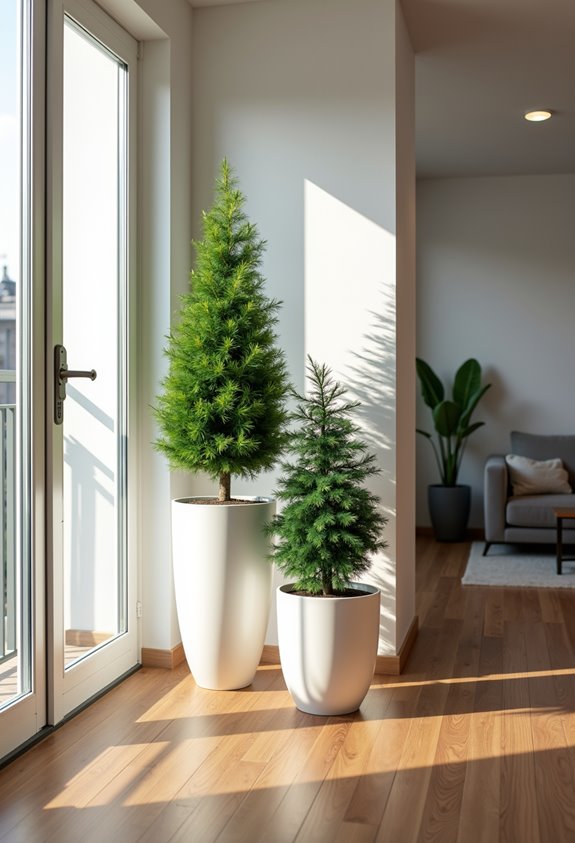
Noise‑Softening Trees: Can Indoor Trees Really Reduce Echo?

Indoor trees reduce echo by absorbing, deflecting, and refracting sound waves using bark, leaves, and layered canopies. Larger trees with thick foliage, like Ficus or Rubber trees, absorb more sound energy, lowering reverberation by up to 15%. Their rough bark helps disrupt wave reflection, and multi-layered arrangements amplify noise reduction by 5 to 8 decibels. Strategically placing these trees near noise sources enhances acoustic comfort in offices or homes. Understanding these mechanisms reveals effective echo control strategies indoors.
Key Takeaways
- Indoor trees absorb sound through leaves, bark, and stems, reducing echo by disrupting sound wave reflections and diffusing noise.
- Dense canopies with overlapping leaves effectively scatter and redirect sound waves, significantly minimizing indoor echoes.
- Combining multiple smaller trees of varying species and heights creates layered sound barriers for enhanced echo control.
- Strategic placement of indoor trees near noise sources prevents sound spread and improves acoustic comfort in spaces.
- Artificial trees with thick foliage offer consistent noise absorption, complementing live plants to reduce echo without maintenance needs.
The Science Behind Indoor Noise Reduction
You may be interested


Although often overlooked, indoor trees play a significant role in reducing noise levels in enclosed spaces. These plants contribute to noise control through sound absorption by their leaves, branches, and bark, lowering ambient noise effectively. The texture of tree bark, especially rougher surfaces, enhances this absorption, leading to less reverberation and echo. Indoor trees employ mechanisms like absorption, deflection, and refraction to alter sound wave behaviors within rooms. Research demonstrates that spaces featuring living walls with multiple plant layers can reduce echo by approximately 15%, improving acoustics. Additionally, strategically combining varied tree heights and densities scatters sound waves more efficiently, creating a layered sound barrier. This approach helps maintain quieter indoor environments by minimizing the reflection and persistence of sounds, providing practical benefits in both residential and commercial settings. Compact artificial trees ranging from 3-6 feet are especially effective in apartments for noise reduction due to their optimal size and scale.
How Trees Absorb Sound Indoors

Leaves, bark, and stems each contribute to indoor sound absorption. Rough bark textures, like those on larch trees, effectively absorb sound by disrupting wave reflection. Indoor trees absorb sound by trapping sound waves on their surface fibers and porous structures, reducing noise levels in rooms with prevalent hard surfaces such as concrete or glass. Larger trees with greater leaf surface areas provide increased sound absorption compared to smaller plants. Strategically placed indoor trees form layered barriers that intercept and absorb sound waves before they bounce off walls and ceilings, minimizing echoes. The combination of tree species, size, and placement plays a crucial role in optimizing sound absorption indoors. This approach can greatly improve acoustic comfort in offices, homes, or public spaces with hard, reflective surfaces. Additionally, many UV-resistant artificial trees are designed with realistic leaf textures that can enhance sound absorption properties indoors.
Deflecting Noise With Plant Structures

When sound waves encounter flexible plant parts, such as leaves and stems, these structures vibrate, redirecting acoustic energy instead of reflecting it back as an echo. This deflecting noise mechanism prevents sound waves from bouncing directly off surfaces, reducing sharp echoes indoors. Thick trunks, like those of oak trees, also contribute by scattering sound more effectively than rigid materials, enhancing noise control. Plants reduce noise levels by creating a multi-layered barrier that diffuses varying frequencies, balancing sound absorption with redirection. Incorporating diverse plant textures and heights improves this effect, absorbing sound and minimizing harsh reflections. Studies show that green barriers can cut noise by 5 to 8 decibels. Therefore, these natural elements work together, softening interior acoustics without relying solely on conventional soundproofing materials. Additionally, incorporating slim artificial trees indoors can effectively enhance room ambiance while contributing to noise reduction in compact living spaces.
The Role of Tree Canopies in Echo Control

The tree canopy plays a critical role in controlling indoor echoes by absorbing and redirecting sound waves. Tree canopies feature dense leaves and rough bark that disrupt sound waves, effectively reducing harsh reflections indoors. Broadleaf canopies excel at echo control by deflecting sound waves more efficiently than sparse foliage. Multiple layers of overlapping leaves increase the canopy’s ability to scatter sound and minimize reverberation. Proper placement of these canopies can form natural acoustic barriers that enhance overall acoustic comfort within a room. By dampening echoes, tree canopies help maintain sound clarity in large indoor spaces, such as open offices or atriums. This eco-friendly solution complements traditional soundproofing methods and fosters a more enjoyable auditory environment without extensive structural changes. Many artificial options are designed to effectively block noise while allowing airflow, making them a practical choice for enhancing indoor acoustic comfort through noise reduction features.
Refraction of Sound Waves by Indoor Plants
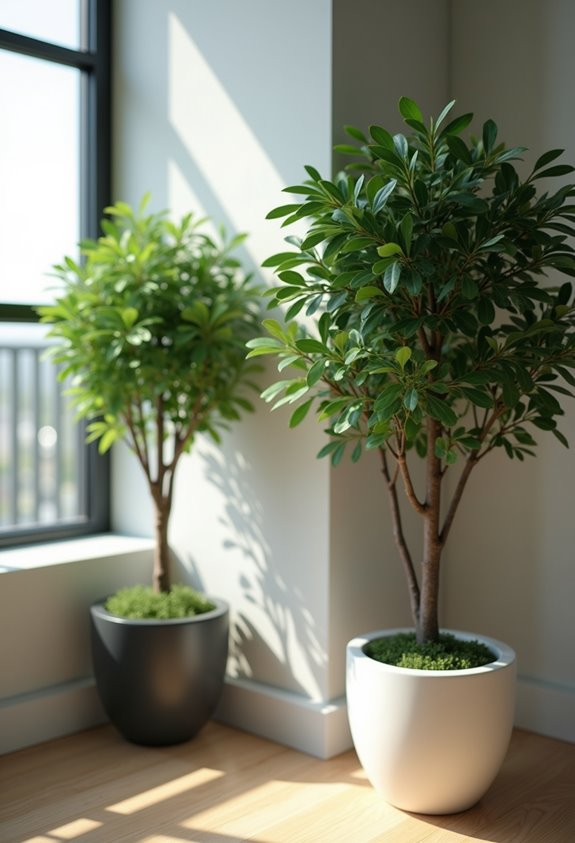
Beyond canopies’ sound absorption, indoor plants also influence acoustic environments through sound wave refraction. As sound waves encounter leaves and stems, their paths bend and scatter, which helps reduce echo levels in indoor spaces. Plants help break up direct sound reflections by creating multi-layered surfaces, similar to soft carpeting. Vines and ground cover plantings excel at this by forming dense, irregular layers that redirect sound waves efficiently. When arranged with varying sizes and structures, plants disrupt sound wave continuity, causing echoes to disappear. This refraction effect softens harsh noises typically amplified by flat, hard surfaces. Strategically placed greenery consequently serves as a practical solution to reduce disruptive echoes, contributing to improved indoor acoustic quality without relying solely on traditional materials. Additionally, choosing low-maintenance artificial trees can provide a practical, durable option for improving indoor acoustics while requiring minimal care.
Selecting the Best Indoor Trees for Sound Absorption
Although many factors influence indoor acoustics, selecting the right trees greatly enhances sound absorption in enclosed spaces. Indoor trees like Ficus and Rubber trees, with dense canopies and thick leaves, provide ideal sound absorption by dampening noise levels effectively. Trees with rough bark textures, such as Larch, further reduce echo by scattering sound waves through their coarse surface. Combining multiple smaller indoor trees increases overall absorption, as their collective leaf area intercepts and mitigates sound reflections. These trees not only absorb sound but also introduce natural, subtle noises that mask disruptive background sounds. Choosing species with robust foliage and bark characteristics is essential to reduce echo and influence indoor noise levels positively. Proper selection considerably contributes to quieter, more comfortable interior environments through enhanced sound absorption capabilities. Popular choices like the Artificial Ficus Tree offer realistic foliage density that supports noise reduction indoors.
Optimal Placement of Trees to Minimize Echo
Placing indoor trees strategically around a room maximizes echo reduction efficiency. Trees located near noise sources such as printers absorb sound before it spreads. Positioning taller trees at elevated points captures high-frequency echoes, reducing overall echo levels. Arranging trees around large indoor space perimeters creates natural sound barriers, helping to deflect and absorb reflected noise. Using a mix of tree species with varying leaf density and heights enhances layered sound absorption. This multi-dimensional approach improves echo control more effectively than uniform planting. In open-plan areas, trees help break up sound waves, minimizing echo without obstructing sightlines. Overall, thoughtful placement guarantees indoor trees serve as practical acoustic elements that absorb sound efficiently while contributing to spatial aesthetics. Additionally, selecting trees with weighted pots ensures stability, especially in areas with airflow that might otherwise cause them to topple.
Enhancing Workplace Productivity Through Acoustic Plants
When integrated thoughtfully, acoustic plants substantially improve workplace sound quality and employee focus. Plants can help dampen noise by absorbing sound waves and reducing echoes, essential in open offices where 60% of cubicle workers cite sound privacy as a concern. Strategically placing greenery near printers or busy zones creates natural sound barriers, limiting noise spread and enhancing concentration. This reduction in ambient noise supports a calmer atmosphere, which studies link to lower stress and increased creativity among employees. Consequently, quieter workspaces contribute to higher productivity levels and a better customer experience by enabling clearer communication and fewer distractions. While not a standalone solution for all acoustic issues, plants can help transform noisy environments into more manageable, pleasant spaces in office design. Using skinny plants with narrow profiles is especially effective in such settings because they provide greenery without taking up much space or visual bulk.
Combining Plants With Other Acoustic Treatments
Integrating plants with conventional acoustic treatments enhances overall noise control in interior spaces. Plants effectively dampen mid-range frequencies, while sound-absorbing panels target low and high frequencies, creating a balanced acoustic profile. Combining greenery with soft furnishings, such as carpets or cushions, further improves sound absorption by layering materials that interrupt sound waves. Strategic placement of plants acts as natural barriers, disrupting sound pathways without sacrificing room aesthetics. Research shows that this combination markedly reduces reverberation time, which enhances speech clarity and ambient sound quality. Effective noise reduction relies on selecting dense materials alongside plants to maximize performance. This approach blends biophilic design with technical acoustic treatments for measurable improvements in interior sound environments. Such integration benefits offices, classrooms, and public spaces seeking efficient echo reduction solutions. Additionally, incorporating compact and versatile artificial trees can provide consistent aesthetic appeal and acoustic absorption without maintenance concerns.
Professional Strategies for Indoor Noise Management
Effective indoor noise management relies on strategic use of materials and design elements tailored to reduce reverberation and echo. Professionals recommend integrating indoor trees to cover surface areas where sound waves hit hard surfaces. These plants can absorb and deflect unwanted noise, reducing sound levels by up to 15%. Using a variety of tree species with different textures creates a multi-layered barrier that intercepts sound waves effectively. Positioning trees near reflective elements, like windows or walls, helps redirect sound and improves acoustic clarity. Consulting indoor landscaping experts guarantees that tree placement and species align with specific noise challenges. Combining these strategies leverages the natural benefits of plants, providing an efficient, aesthetically pleasing solution for managing indoor echo and enhancing overall sound quality. Additionally, choosing dense and full-bodied artificial trees can maximize sound absorption without the need for maintenance.
Frequently Asked Questions
Do Plants Reduce Echo in a Room?
Plants reduce echo through acoustic absorption, enhancing indoor ambience by utilizing foliage density to trap sound waves. Their natural sound insulation properties effectively minimize reverberation, making spaces quieter and improving overall acoustic comfort in enclosed environments.
Which Type of Tree Is Better for Noise Abatement?
Tree species with thick bark and dense trunks deliver dominant noise damping. Indoor plant selection favors broader leaf density and varied acoustic properties, combining evergreens and broadleaf types for superior sound absorption, deflection, and durable interior noise abatement.
How to Block Out 100% of Noise?
Blocking out 100% of noise is nearly impossible. Combining white noise, soundproof curtains, and acoustic panels with indoor plants maximizes sound reduction, creating a quieter environment while acknowledging complete silence cannot be fully achieved.
Can Trees Help Reduce Noise?
Like nature’s gentle whisper, trees enhance sound insulation by integrating urban greenery and biophilic design, effectively improving indoor acoustics and providing a natural barrier that softens harsh noise reflections within built environments.


