As an Amazon Associate, we earn from qualifying purchases. Some links on this site are affiliate links at no extra cost to you. Our recommendations are based on thorough research and editorial judgment.

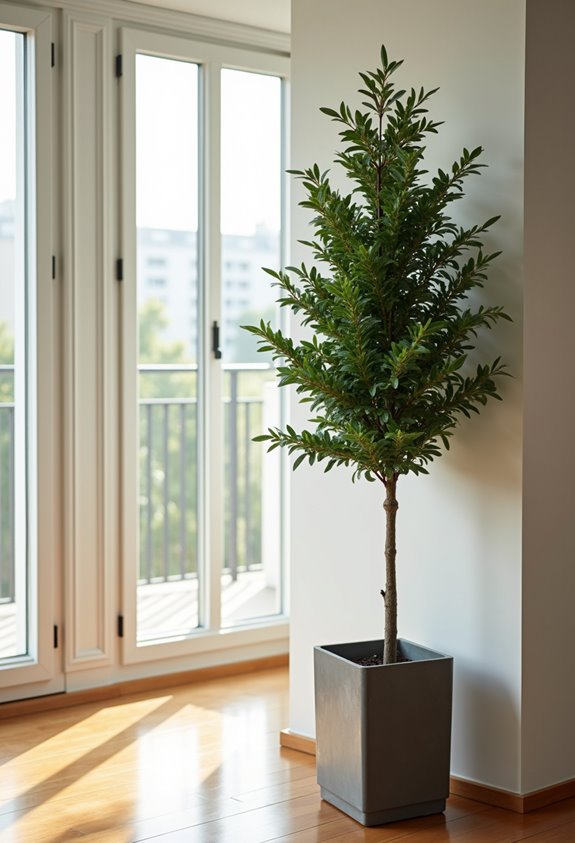
What Is a Slim Tree? A Beginner’s Guide to Narrow‑Profile Trees

A slim tree has an upright, narrow profile, typically growing 10 to 50 feet tall and 2 to 15 feet wide, ideal for limited spaces. These trees, evergreen or deciduous, save horizontal room while adding vertical interest and privacy. They thrive in urban conditions, requiring minimal pruning and well-drained soil to maintain health. Popular species include Goldspire Ginkgo and Forever Goldie Arborvitae. Exploring their uses and care reveals practical benefits for compact landscapes.
Key Takeaways
- Slim trees have an upright, columnar form, growing tall while occupying minimal horizontal space.
- They range from 10 to 50 feet tall and 2 to 15 feet wide, fitting small yards and urban landscapes.
- Both deciduous and evergreen varieties exist, providing seasonal color changes or year-round greenery.
- Slim trees require minimal pruning but benefit from regular maintenance to maintain their narrow shape.
- Popular species include Goldspire Ginkgo, Forever Goldie Arborvitae, and Tsukasa Silhouette Japanese Maple.
Defining Characteristics of Slim Trees
You may be interested


Slim trees, often called narrow-profile trees, exhibit a distinctive upright growth habit. These slender trees typically feature a columnar or upright form, growing vertically rather than spreading wide. Their narrow form makes them ideal for small garden spaces or compact urban yards. Slim trees usually reach mature heights between 10 and 50 feet, with widths from 2 to 15 feet, conserving space efficiently. Both deciduous and evergreen varieties exist, offering seasonal leaf color changes or consistent greenery throughout the year. Their formal and tidy growth habit requires minimal pruning, simplifying maintenance compared to broader types. This upright growth habit enables slim trees to functionally serve as vertical accents, privacy screens, or shade providers, enhancing landscape usability in confined areas without overwhelming the garden. In addition, slim designs are favored indoors as they can save up to 58% floor space, making them practical for compact living areas.
Advantages of Narrow-Profile Trees in Urban Landscapes

Narrow-profile trees occupy limited horizontal space while growing vertically up to 50 feet tall. Their columnar form suits urban areas and small yards where space is scarce. These trees fit neatly along sidewalks, streets, or near buildings without crowding other plants. Many narrow ornamental trees, such as Goldspire Ginkgo or Forever Goldie Arborvitae, tolerate urban pollution and harsh conditions. They improve air quality and add greenery among concrete. Their upright shape creates effective privacy screens and windbreaks without requiring large planting areas. Additionally, narrow trees offer beautiful seasonal color changes, enhancing urban aesthetics. The slender profile supports biodiversity by providing habitat while maintaining tidy, space-efficient landscapes. This combination of practical and visual benefits makes narrow-profile trees valuable in compact urban environments. Choosing species with manageable root systems also promotes long-term health and stability in restricted urban spaces.
Common Growth Habits of Slim Trees
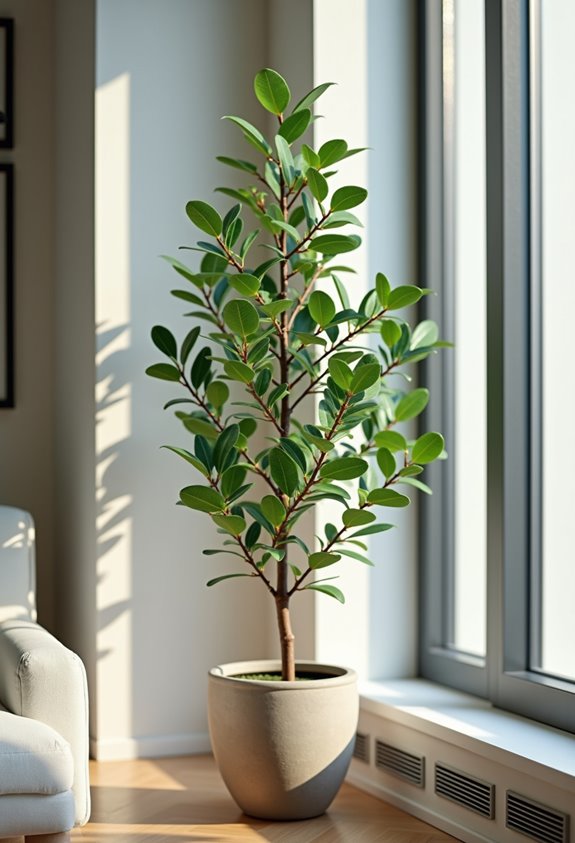
Upright growth forms define slim trees and suit various landscape needs. These trees typically exhibit tall and narrow profiles, often in a columnar form, reaching heights between 10 to 55 feet while staying just 2 to 12 feet wide. Such growth habits make slim trees an excellent choice for small yards and urban landscapes where space is limited. The upright, vase-shaped structures allow for vertical interest without occupying much horizontal space. Many slim trees grow quickly, providing fast shade and aesthetic value. Regular pruning is recommended to maintain their narrow shape and promote healthy, upright growth. Overall, slim trees balance height with a minimal footprint, adapting well to diverse climates and planting conditions in confined spaces. Their compact design and efficient use of space are similar to the space-saving designs featured in slim artificial trees, making them ideal for narrow environments.
Popular Slim Tree Species for Small Yards
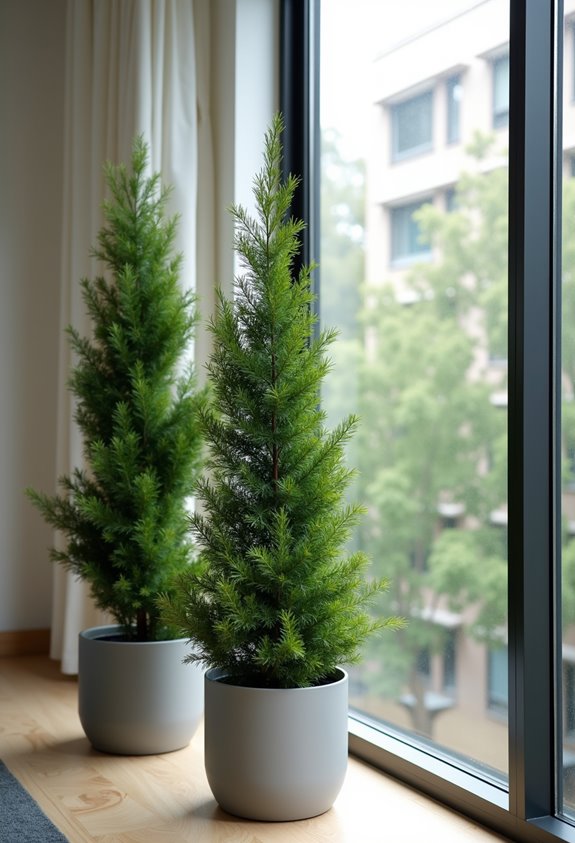
Several tree species are well-suited for small yards with limited space. Narrow trees for small yards like the Goldspire Ginkgo grow 14-15 feet tall but only spread 5-6 feet wide, offering beautiful shade without crowding. The Forever Goldie Arborvitae is a compact option, reaching 12 feet tall and 3-4 feet wide, with striking green and gold foliage and notable disease resistance. The Tsukasa Silhouette Japanese Maple displays vibrant green leaves in spring and small red tones in fall, growing 15-20 feet tall and maintaining a narrow profile. Among flowering choices, the Crimson Pointe Flowering Plum combines early blossoms with a narrow 5-6 feet spread. Additionally, narrow junipers like Skyrocket add verticality up to 15 feet, ideal for privacy and tight spaces. Together, these tree options suit small yards effectively. For best results, ensure these trees are planted in well-draining soil to support healthy root development and prevent overwatering.
Recommended Products

🎄【NATURAL LIFELIKE APPEAL】: Glitzhome Christmas tree features ultra-realistic branches crafted with 1592 PE tips and 743 PVC tips, pre-lit 700 warm white LED light bulbs,and three functional lights - Solid, Flashing and Breathing, the breathing lights give the white tree of romance and sophistication.

Conventional edging does not provide enough depth for both a raised edge and also stop invading grass roots.

This North Valley Spruce Slim Artificial Green Christmas Tree is 6.5 feet tall with a 42 inch base diameter. Featuring hundreds of individually crafted branch tips to create full bodied branches, this tree is designed to look and feel lifelike.
How to Choose the Right Slim Tree for Your Space
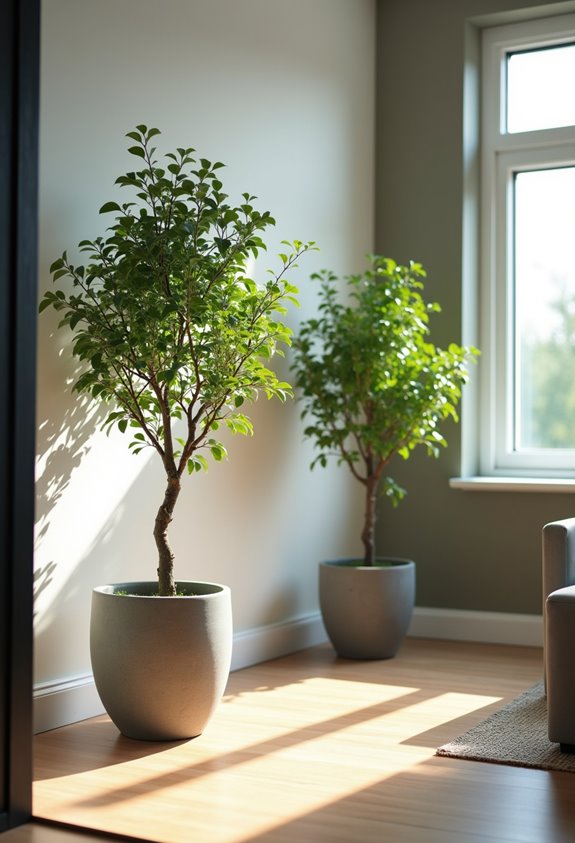
Choosing the right slim tree begins with understanding the available space’s specific dimensions. Key factors include the tree’s mature height and spread, to avoid overcrowding your yard. Choosing a tree with a columnar growth habit suits narrow spaces better. Narrow trees for small yards often vary between evergreen and deciduous trees, which provide seasonal interest or year-round foliage, respectively. Reviewing a full list of suitable species helps match choices to your preferences and local climate requirements. Soil conditions also influence success; guarantee the selected tree thrives in your ground’s drainage and moisture profile. Evaluating these elements guarantees selecting a tree balanced in size, aesthetics, and hardiness. This approach promotes sustainable growth without overwhelming the garden’s proportion or requiring excessive upkeep. Additionally, selecting trees with well-drained soil preferences is essential for their healthy root development and overall vitality.
Recommended Products

Skyrocket Juniper offers a striking columnar shape, perfect for adding vertical interest to landscapes and garden designs effortlessly

Elegant, narrow columnar shape adds vertical interest to any garden, ideal for small spaces and landscape focal points

This thin columnar Juniper fits into very difficult places such as narrow side yards between homes. A super windbreak plant in both cold or hot climates. A hardy alternative to Italian Cypress in Mediterranean-inspired landscapes. Try planting in matched pairs or on four corners of a central courtyard. Makes a super vertical accent in mixed conifer gardens.
Maintenance Tips for Narrow Trees
Effective maintenance of narrow trees demands regular attention to pruning, watering, and soil management to sustain their slender form. Regular pruning encourages healthy growth and preserves the desired narrow profile in species like Armstrong Gold Maple or columnar junipers. Well-drained soil is essential; design soil amendments to match specific species requirements, preventing root rot and nutrient deficiencies. Consistent watering supports strong root establishment, especially during early development stages, and should be adjusted seasonally to avoid water stress. Routine inspections for pests and diseases guarantee timely treatments, maintaining vigor and appearance. Seasonal assessment of height and spread helps keep narrow trees within spatial limits, preventing overcrowding in tight landscapes. These maintenance tips contribute to long-term health and structural integrity, optimizing performance and aesthetic quality in small-space settings. Additionally, choosing trees with UV protection can enhance their durability and appearance when exposed to outdoor balcony conditions.
Recommended Products

Narrow pointed blade allows easy access to twiggy branches and assures a close cut to the trunk

【2-in-1 Versatility】From ground-level pruning to tall tree trimming, Prunarbo’s battery pruning shears with pole does it all. Attach the extendable pole (4.4–8.2 ft) to reach high branches without climbing or straining, and enjoy cleaner, faster cuts with total control.This long reach tree pruner makes heavy-duty gardening safer, easier, and twice as efficient — ideal for anyone who wants pro results with zero hassle

Blade for fresh, living growth, For tree branches, shrubs, and hedges up to 3.2 cm in diameter, Long handle for a maximum cutting reach of 4 m without a ladder, Easy to use in a dense tree
Environmental and Ecological Benefits of Slim Trees
While slim trees occupy limited space, they offer notable ecological advantages in urban and compact landscapes. Their narrow profile allows planting in close groups, creating effective vertical living screens that enhance privacy and support urban biodiversity. Slim trees like Goldspire Ginkgo and Forever Goldie Arborvitae withstand urban pollution, improving air quality. These trees’ smaller canopies permit sunlight to reach the ground, helping understory plants thrive and supporting a diverse habitat for local fauna. Additionally, slim trees require less soil area, preserving space for native vegetation, which benefits wildlife variety. Their root systems aid stormwater management by improving drainage, reducing runoff, and limiting erosion in tight spaces. Collectively, slim trees balance spatial constraints with significant environmental benefits, making them suitable for dense urban designs. Moreover, the use of UV-resistant synthetic materials in topiary trees demonstrates how narrow-profile greenery can maintain long-lasting aesthetics with minimal maintenance.
Design Ideas Using Slim Trees in Small Gardens
Three primary strategies utilize slim trees to maximize space in small gardens. First, planting narrow trees for small spaces like Goldspire Ginkgo or Tsukasa Silhouette Japanese Maple adds vertical interest without crowding, enabling layered planting. Second, columnar trees such as Armstrong Gold Maple efficiently frame views or act as focal points while consuming minimal horizontal space. Third, integrating flowering trees like Crimson Pointe Flowering Plum or Raspberry Spear Crabapple enhances seasonal color and fragrance, enriching tight spaces without bulk. Additionally, using slim evergreens like Forever Goldie Arborvitae creates privacy screens that maintain openness. Combining narrow junipers, such as Skyrocket or Pencil Point, with flowering trees provides texture diversity and tidy structure. These design ideas guarantee trees provide functionality and aesthetic appeal in small landscapes, maximizing limited area effectively. For added convenience, consider low-maintenance options to ensure your slim tree garden remains beautiful with minimal effort.
Recommended Products

13.5HP B&S XR2100 ENGINE: Equipped with the legendary B & S XR2100 engine, this mini excavator delivers robust digging power and consistent torque. Designed for reliability, it handles tough trenching and landscaping tasks with ease, offering low fuel consumption and minimal maintenance for high-efficiency projects.

COMPLETE LANDSCAPE LIGHTING KIT - Includes six (6) solid brass spotlights, four (4) solid brass path lights, ten (10) easy-install 10-inch Hammer Stakes, one (1) 150-watt low voltage transformer, one (1) mechanical timer, six (6) 5W RGBCW LED MR16 bulbs, four (4) 3.5W RGBCW G4 LED Bi-Pin bulbs, two (2) Pro Junction Hubs, one (1) conduit, one (1) RF remote control and 100 feet of direct burial cable. Everything needed for a professional color-changing outdoor lighting system!
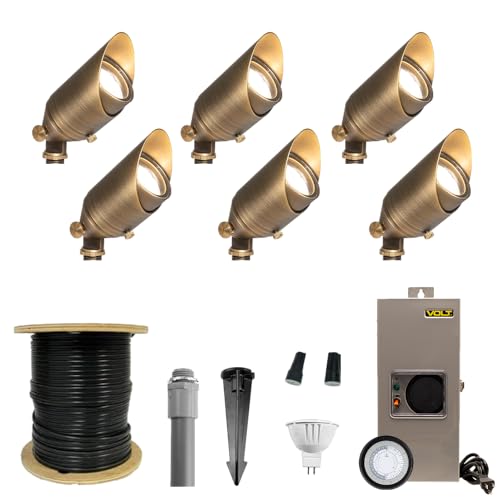
COMPLETE KIT - Includes (6) VOLT Top Dog Scotty cast brass spotlights with 4-foot lead wires, (6) Single-source 5W MR16 LED bulbs (30W halogen replacement) with warm white 2700K color temperature and 38-degree beam spread, (1) 150-Watt Slim Line LED Transformer with mechanical timer, (1) 24-inch length of 3/4-inch PVC conduit for the transformer, (12) DryConn waterproof wire connectors, (6) 10-inch Hammer Stakes, and 100 feet of 14/2 direct burial cable.
Matching Slim Trees to Local Climate and Soil Conditions
Choosing slim trees that complement small garden designs depends heavily on local climate and soil characteristics. Tree selection starts with identifying hardy zones suitable for narrow-profile trees, such as zones 4-9 for Goldspire Ginkgo and Forever Goldie Arborvitae. Proper soil conditions are essential; well-drained soil prevents root rot and supports healthy development. Soil pH and moisture vary, so species like the Blushing Delight Columnar Apple Tree require specific environments for ideal growth. Local climate factors include temperature extremes and seasonal shifts, with narrow junipers surviving colder regions. Additionally, understanding native wildlife and pest pressures aids in selecting resilient slim trees, ensuring ecological balance. Matching slim trees to local climate and soil conditions enhances garden success by aligning plant needs with environmental realities, fostering long-term stability. It is also important to consider well-drained, loamy soil enriched with organic matter to support optimal root growth and overall tree health.
Recommended Products

AGGRESSIVE ROOT & STUMP EXTRACTION: Rip through roots, packed soil, clay, and buried debris with concentrated digging force designed for fast stump extraction and land clearing. The narrow-profile stump bucket penetrates deep ground conditions more efficiently than standard buckets, making it ideal for brush grubbing, tree removal, and site prep work

𝗠𝗜𝗖𝗛𝗘𝗟𝗜𝗡 𝗖𝗨𝗣𝗦𝗢𝗟𝗘 - The etnies Marana combines the legendary skate cupsole silhouette with Michelin rubber outsoles for unmatched grip and heavy-duty performance.

FIN-COMPATIBLE DESIGN - Purpose-built for tactical water operations, the Altama Maritime Mid boots feature a streamlined, fin-friendly fit designed to be worn sockless; The narrow profile accommodates most military dive fins, ensuring high-performance long swims and aquatic missions
Frequently Asked Questions
What Is the Best Tree for a Narrow Space?
The best narrow space trees include Goldspire Ginkgo and Forever Goldie Arborvitae, chosen for their slender profiles. Suitable locations require soil and zone compatibility. Maintenance tips emphasize pruning; planting instructions guarantee ideal growth, while seasonal considerations enhance visual appeal.
What Size Is Considered a Slim Christmas Tree?
Like a candle’s slender flame, slim Christmas trees typically measure 25 to 30 inches wide and 5 to 7 feet tall. Popular slim tree styles offer narrow tree options and compact tree designs, ideal for space-saving seasonal tree selection using various slim tree materials.
What Are Those Skinny Trees Called?
Skinny tree varieties, often called slim trees, are ideal for narrow space landscaping and are among the best urban trees. Choosing narrow trees involves considering slim tree maintenance and selecting decorative skinny trees that suit limited space and conditions.
What Are the Benefits of Tall, Skinny Trees?
Tall, skinny trees symbolize resilience, standing slender pillars in confined spaces. Their space-saving solutions enhance urban gardening and vertical landscaping, while slender tree varieties offer aesthetic appeal and seasonal planting benefits, maximizing beauty without sacrificing ground area.


