As an Amazon Associate, we earn from qualifying purchases. Some links on this site are affiliate links at no extra cost to you. Our recommendations are based on thorough research and editorial judgment.

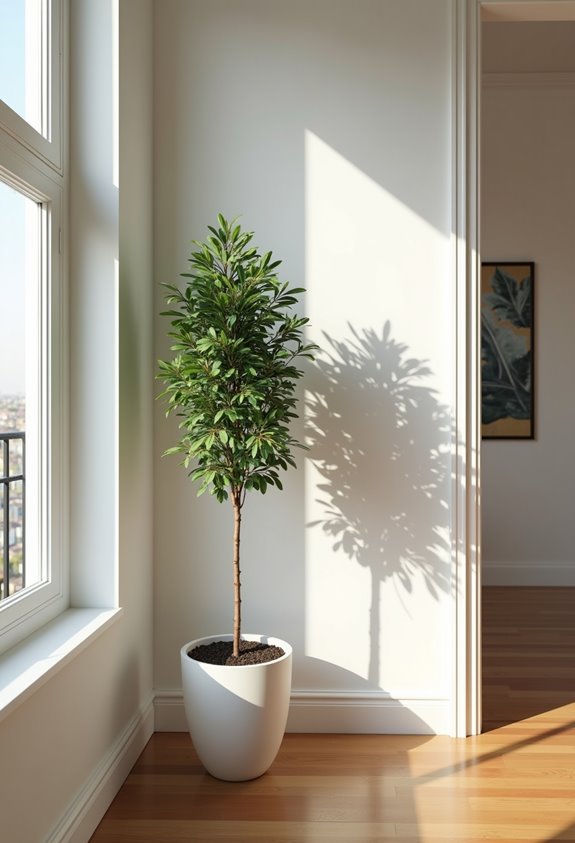
How to Repot a Slim Indoor Tree Without Damaging the Roots

Repot a slim indoor tree by first watering it one day before to keep roots intact. Choose a pot one size larger with drainage holes and fresh, species-appropriate potting mix for aeration. Gently remove the tree by loosening the root ball, avoiding root damage. Center the tree, fill soil firmly around roots without air pockets, and water thoroughly. Avoid direct sun and fertilizing for four weeks. Follow proper techniques to support healthy recovery and growth, with more detailed care strategies ahead.
Key Takeaways
- Water the tree a day before repotting to keep the root ball moist and intact during removal.
- Gently tilt the pot sideways and carefully wiggle the root ball free to avoid root damage.
- Use a flat tool, like a screwdriver, to loosen roots from rigid pots without tearing them.
- Choose a new pot one size larger with drainage holes and prepare fresh, airy potting mix.
- Center the tree in the new pot, fill soil firmly around roots, and avoid air pockets for stability.
Why Gentle Repotting Matters for Your Tree
You may be interested


Handling a slim indoor tree with care during repotting is essential. Gentle repotting prevents root damage, which is crucial for the tree’s quick recovery and long-term vigor. Maintaining intact roots reduces transplant shock, helping the plant stay healthy and happy. When transferring to a slightly larger pot—approximately 2 inches wider in diameter—it is important to loosen the root ball carefully, avoiding unnecessary tearing. Providing fresh, nutrient-rich soil boosts root development and encourages fuller, greener leaves. Ensuring no air pockets form around roots during planting optimizes water and nutrient uptake, which supports growth. This cautious approach also minimizes stress on sensitive species that are easily shocked, fostering robust blooms and sustained indoor tree health. Proper gentle repotting is a foundational step in preserving health. Using a sturdy pot sized appropriately helps provide stability and prevent tipping when the tree is repotted.
Signs Your Slim Indoor Tree Needs Repotting

Slim indoor trees show specific signs when they require repotting to maintain ideal growth. Roots emerging from the drainage holes indicate the tree is root bound and strongly needs a larger pot. Rapid soil drying after watering also signals that roots have outgrown the current container and require more space. A top-heavy tree that tips easily suggests the root ball is too large for its pot, risking instability. Frequent watering followed by quick soil drying often means overcrowded roots. Additionally, signs of stress like smaller leaves or leaf drop can indicate root rot risks within a constricted pot environment. Addressing these signs by repotting helps prevent further root damage and promotes healthy development in a suitably sized pot with adequate drainage holes to avoid excess moisture retention. Maintaining well-draining soil with appropriate moisture levels is essential to keep the roots healthy and prevent rot.
Selecting the Ideal Time for Repotting

When is the best time to repot an indoor tree for prime growth? The ideal period for repotting slim indoor plants is during their active growth seasons, specifically spring or early summer. This timing supports faster recovery and encourages robust root development. Repotting should occur when roots visibly emerge from drainage holes or when soil dries rapidly after watering, indicating root crowding. Additionally, if a tree becomes top-heavy or unstable, it likely needs a larger container to secure its structure. Frequent watering requirements also suggest roots have filled the pot, leaving insufficient soil to retain moisture. For best results, always check specific care guidelines for certain indoor tree species, as their growth patterns may affect the prime repotting schedule and minimize damage to the roots. It is also important to ensure the plant is placed away from intense heat sources to prevent stress during the repotting process.
Preparing Tools and Potting Medium

Before beginning the repotting process, it is essential to gather all necessary tools and materials to guarantee efficiency and minimize root damage. Select a new pot one size larger than the current one, ensuring it includes drainage holes to prevent water accumulation. Use fresh potting mix, specifically formulated for the tree’s species, providing proper aeration and balanced nutrients. Lay down a potting mat or tray to contain soil spills and streamline cleanup. Collect a small trowel or spoon for precise soil handling, and a box cutter to remove stubborn pots if needed. Prepare a drainage layer using broken clay pot pieces or small rocks at the bottom of the new pot, promoting healthy moisture levels while helping to avoid overwatering during initial growth stages. Additionally, choosing a pot with a weighted base can enhance stability and prevent tipping during and after repotting.
How to Water and Prepare the Tree Ahead

Proper hydration of the indoor tree’s root system supports a smoother repotting process. Water the tree lightly about 24 hours prior to repotting to guarantee the soil is slightly moist without being saturated. This moisture level maintains the integrity of the roots and eases handling during transplanting. It is essential to verify the soil’s dampness by touch; overly wet soil may cause root damage and stress. Prepare a clean, organized workspace with all necessary materials, including a new pot featuring drainage holes and freshly mixed potting soil tailored to the tree’s species. Position the tree in a well-lit spot post-watering to aid acclimation and stress recovery. These steps optimize root health and improve overall repotting success.
Techniques for Safely Removing the Tree
Gently lifting the indoor tree from its pot requires steady hands and tactful techniques. Watering the tree a day before helps maintain root ball integrity and reduce stress during removal. Firmly grasp the tree base while tilting the pot sideways, easing the root ball out gently. If the tree resists, tap the pot’s sides and wiggle it slightly to loosen roots poking into the container walls. Avoid excessive force to prevent root damage. For rigid pots, carefully use a flat tool, such as a screwdriver, to pry the root ball free without aggressive pressure. When roots are visible, gently tease them free from the pot’s edges. These methods minimize physical trauma, preserving the tree’s health during transfer to a new growing environment. Additionally, considering the stability of the base is important when repotting to prevent accidents and ensure the tree remains upright in its new pot.
Inspecting and Handling the Roots Carefully
Once freed from its container, the root system requires meticulous examination for damage or abnormalities. Inspecting roots involves checking for rot, discoloration, or circling patterns that may hinder growth. Damaged roots should be trimmed carefully using sterilized tools, avoiding aggressive cuts to preserve overall health. Gently loosen compacted roots with a small trowel to encourage outward growth in the new pot. Thorough inspecting helps identify problems early, reducing transplant shock during repotting. Maintaining root integrity guarantees the indoor tree establishes well after relocation. Handle the root ball with care to prevent breakage or tearing during repotting. Proper inspection and root management promote healthy development, supporting a stable structure and nutrient uptake, which is critical for slim indoor trees adapting to new soil environments. Additionally, selecting plants with flexible and durable branches can help ensure the tree adapts well to its new surroundings and withstands environmental stresses.
Choosing the Right Pot and Soil Mix
Selecting an appropriately sized pot is essential when repotting a slim indoor tree. The new pot should be only 1-2 inches larger in diameter than the current one. This size prevents excessive moisture retention, which can damage roots, and supports proper root growth. The pot must have drainage holes at the bottom to allow water to flow freely and avoid root rot. A layer of broken clay pot pieces or stones at the base can further improve drainage by preventing soil from blocking these holes. Use a well-draining potting mix designed for the specific tree species. Avoid garden soil, as it’s often too dense and holds moisture excessively. Ensuring the right pot and soil around the roots keeps moisture balanced and promotes healthy development. Understanding the watering frequencies specific to your tree species helps maintain optimal soil moisture levels during and after repotting.
Proper Placement and Soil Filling Around Roots
Place the slim indoor tree centrally in the new pot to secure balanced stability. Proper placement guarantees the tree’s height and root ball remain consistent with its previous soil level, preventing trunk burying that causes rot. Gently fill around the roots with fresh potting mix, evenly covering the root ball to avoid air pockets that hinder growth. Use fingers or a small trowel to lightly press soil around the roots, stabilizing the tree while allowing adequate airflow. Maintaining a slightly exposed root ball top supports healthy respiration. Adjust soil depth only if accommodating natural growth height, guaranteeing roots are neither too deep nor exposed. This careful soil filling around the roots protects root structure and promotes healthy establishment in the new container. Compact trees often feature pre-attached hinged branches that simplify setup and reduce stress on the root system during relocation.
Watering and Immediate Aftercare Tips
After securing the slim indoor tree in its new pot with fresh soil, the next step involves careful watering to stabilize the root environment. Watering should be gentle but thorough, applied until moisture drains from the pot’s bottom holes to help the soil settle uniformly around the roots. This process guarantees there are no air pockets that could dry out or damage the root system. Overwatering must be avoided to prevent root rot, so monitoring soil moisture closely during the first few weeks is essential. The soil should remain evenly moist but never soggy. Maintaining the tree in its usual light, without direct sun exposure, supports recovery. Fertilizers should be withheld for about one month, allowing roots to reestablish without added nutrient stress. Choosing pet-friendly options ensures the indoor tree remains safe in homes with animals.
Monitoring and Adjusting Care Post-Repotting
While recovering from repotting stress, the slim indoor tree requires attentive observation for transplant shock indicators, like wilting or leaf yellowing. Monitoring these signs helps determine if the plant needs additional time to acclimate. Checking the moisture level is essential; allow the top inch of soil to dry between waterings to avoid overwatering, and adjust irrigation accordingly. Keep the tree in light conditions similar to its previous environment to reduce stress, moving it slowly to brighter areas if needed. Avoid fertilizing for at least four weeks after repotting to prevent root damage. Maintaining a stable environment without sudden temperature fluctuations or drafts supports root recovery. Regular monitoring and careful adjustments optimize the slim indoor tree’s health during this vulnerable post-repotting phase. Additionally, selecting plants made from flame-retardant materials can enhance safety when bringing greenery indoors after repotting.
Frequently Asked Questions
How to Repot Without Damaging Roots?
Root care methods involve careful extraction and minimal root disruption. Selecting appropriate potting soil types supports aeration. Considering tree growth factors guarantees repotting timing favors recovery, promoting healthy root establishment and sustained indoor tree vigor during transplantation.
How to Repot an Indoor Tree?
Repotting an indoor tree is effortlessly achieved by embracing soil chaos and root neglect. Truly, indoor tree care demands selecting fresh potting soil, employing prudent pruning techniques, and ensuring careful handling—because every root deserves its stress-filled makeover.
How to Repot a Tree Without Killing It?
Repotting a tree without killing it requires selecting appropriate soil types, applying careful pruning techniques to roots, and adhering to proper watering schedules. These steps minimize stress, encourage healthy root growth, and guarantee successful transplanting and survival.
What Do You Put in the Bottom of an Indoor Planter for Drainage?
At the base of an indoor planter, effective drainage materials are essential. Gravel, broken clay shards, or a mesh screen create a planter base that prevents waterlogging. These layers safeguard indoor soil, ensuring roots remain healthy and aerated.


