As an Amazon Associate, we earn from qualifying purchases. Some links on this site are affiliate links at no extra cost to you. Our recommendations are based on thorough research and editorial judgment.


Choosing Between One Large Tree Vs Several Small Ones

Choosing between one large tree and several small ones depends on site and goals. Large trees offer immediate canopy and shade, reducing cooling costs, but transplant shock often delays root system recovery up to five years. Small trees establish faster with less root loss, enabling quicker growth and better biodiversity support through varied habitats; they cost about one-fifth less and need less maintenance. Consider space, budget, and ecosystem impact carefully for ideal selection. More insights help clarify effective planting strategies.
Key Takeaways
- Large trees offer immediate shade and aesthetic impact but have higher costs and longer establishment periods than small trees.
- Several small trees provide greater biodiversity benefits by supporting diverse wildlife and enhancing ecosystem resilience.
- Small trees establish more quickly, reducing transplant shock and lowering long-term maintenance expenses compared to large trees.
- Planting multiple small trees increases carbon sequestration and soil stabilization more effectively than a single large tree.
- Tree size choice should balance space availability, long-term growth goals, maintenance capacity, and desired aesthetic outcomes.
Benefits of Planting a Large Tree
You may be interested


Several advantages exist when opting to plant a large tree instead of multiple smaller ones. Planting a large tree provides immediate aesthetic impact, enhancing outdoor spaces with mature foliage and shade quickly. Mature trees improve air quality and help lower surrounding temperatures without the typical waiting period smaller trees require. Their established root systems efficiently access water and nutrients, demanding less initial maintenance than several young trees combined. A single large tree offers habitat for wildlife, supporting more species due to its complex structure and larger canopy. Additionally, the immediate shade reduces cooling costs for nearby buildings, leading to long-term economic benefits through energy savings. This combination of ecological, economic, and visual benefits makes planting a large tree a practical choice for those valuing immediate environmental and community advantages. Furthermore, trees like Austrian pines thrive in USDA zones 4-7, making them suitable for various regions while requiring moderate maintenance.
Advantages of Multiple Small Trees

Planting multiple small trees offers flexibility in landscape design and ecological benefits. Small trees generally experience less transplant shock due to their developing root systems, promoting healthier root growth after planting. This adaptability helps native trees and other species establish quickly, enhancing long-term survival rates in urban and natural settings. Additionally, diversifying tree species by planting several small trees fosters habitat variety, supporting wildlife and increasing ecosystem resilience. Smaller trees also demand less initial maintenance and are more cost-effective, making them practical for constrained spaces. By selecting a mix of native trees and compatible tree species, landscapers can tailor environments for specific ecological functions. Overall, multiple small trees contribute to robust biodiversity while easing management challenges compared to singular, larger specimen trees. Moreover, incorporating trees with well-draining soil requirements can optimize their health and growth in diverse environments.
Recommended Products

✔ GET MORE FOR YOUR MONEY - Our premium Longleaf pine needles contain much less debris than other competitors. This product is sustainably harvested from our tree farms, and it’s cleaned before packaging. Our pigment colorant is non-toxic and safe.
![Greenwood Nursery: Live Trees - Sky Pencil Japanese Holly Tree + Ilex Crenata - [Qty: 50x 2.5 Pots] - (Click for Other Available Plants/Quantities)](https://m.media-amazon.com/images/I/51l42AXgHNL._SL500_.jpg)
🌿 [INFO1] - Unique, Ilex crenata, commonly known as Japanese holly or box-leaved holly, is a dense, multi-branched, evergreen shrub with a rounded form that typically matures to 5-10’ tall and wide with dozens of uses in the landscape. It's appreciated for its glossy, spineless, deep green leaves. It has 4 petaled white flowers which bloom in 3-7 flowered cymes in late spring, and black, rounded, and somewhat inconspicuous fruits.

The green iguana is the most in-your-face invasive species in South Florida, and they’ve been spotted in the wild across much of the state.
Transplant Challenges With Large Trees

While multiple small trees offer several planting advantages, larger trees present distinct transplant challenges. Large trees, especially balled and burlapped varieties, often lose significant roots during harvesting, slowing establishment for two to five years. One critical issue is buried root collars caused by planting too deeply, seen in 93% of cases, which frequently leads to transplant failure. Transplant challenges also include root ball damage and bark injuries during transport, increasing vulnerability. Moreover, balled and burlapped trees may require three to ten years to recover from root system shearing. These establishment issues elevate susceptibility to pests and diseases, complicating early care. The complexity of handling larger trees demands careful attention to planting depth, root ball integrity, and pest management to improve survival and long-term health prospects. In contrast, selecting compact artificial trees for indoor environments can avoid many of these challenges due to their low maintenance and easy setup.
Root Health and Establishment in Young Trees

Young trees generally establish root systems more rapidly and with less transplant shock compared to larger specimens. Smaller trees experience fewer acclimation challenges because their root systems adapt more efficiently to local soil conditions. These trees typically sustain less root loss during planting, unlike larger balled and burlapped trees that endure prolonged recovery periods. Additionally, root collar development occurs sooner in smaller trees when proper mulching and care are applied, promoting long-term health and resilience. The risk of root issues such as girdling roots is also lower in younger trees, where roots avoid becoming pot-bound or damaged during transport. Overall, choosing smaller trees supports healthier root establishment and reduces the transplant shock often associated with larger, more mature specimens. This guarantees stronger growth and longevity in most planting environments. Moreover, selecting UV-resistant materials for balcony trees ensures durability and minimal maintenance to complement healthy plant growth.
Cost Comparison: Large Tree Vs Small Trees

A typical large tree costs about five times more than a small tree, averaging around $500 compared to $100. This significant cost difference affects initial budgeting and landscaping plans. Smaller trees require less investment upfront, allowing more trees to be planted for the same price, which may improve coverage and design flexibility. Large trees often face greater transplant shock, leading to increased maintenance costs that include watering, staking, and root care to guarantee survivability. In contrast, smaller trees establish faster with lower ongoing maintenance expenses, making them cost-effective over time. Although large trees provide immediate visual impact, they do not always promise better long-term results. Smaller trees, given proper care, can grow to comparable sizes and offer similar environmental benefits at a fraction of the initial cost. Additionally, selecting trees with zero maintenance requirements like artificial trees can further reduce ongoing care and expenses.
Impact on Local Ecosystems and Biodiversity
Cost considerations aside, the ecological impact of planting choices shapes local biodiversity and ecosystem health substantially. A large tree offers immediate shade but supports fewer species compared to several smaller trees. Smaller trees promote biodiversity by providing diverse habitats for birds, pollinators, and insects across various growth forms. For example, oaks, as keystone species, sustain over 557 caterpillar species in the Mid-Atlantic, highlighting the value of native species mix. Additionally, smaller trees adapt better to local ecosystems and soil, fostering healthier root systems and stabilizing soil. Groups of smaller trees improve ecosystem functions such as carbon sequestration and soil nutrients more effectively over time. Therefore, selecting multiple smaller trees can enhance environmental benefits by strengthening local ecosystems and encouraging richer biodiversity than relying on one large tree alone. Additionally, UV-resistant materials used in artificial topiary trees help maintain their appearance and durability, supporting sustainable landscaping choices.
Maintenance and Care Requirements
Maintenance demands differ considerably between tree sizes, influencing long-term care strategies. Smaller trees typically require less intensive maintenance, as they recover from transplant shock more quickly and establish healthy root systems within a few years. These new trees benefit from straightforward tree care, including regular watering, mulching, and pruning to shape growth. In contrast, one large tree needs more frequent inspections for potential bark damage and structural issues affecting the tree’s trunk. Maintenance includes managing pests and diseases, requiring skill and time. Additionally, smaller trees are easier to train in early years, allowing precise pruning to direct branch development. While several small trees spread maintenance tasks, a large tree demands concentrated effort for its health and safety. Consequently, maintenance plans differ considerably when choosing between one large tree and multiple smaller ones. Artificial double ball topiary trees offer a low maintenance solution that eliminates many traditional care challenges.
Recommended Products
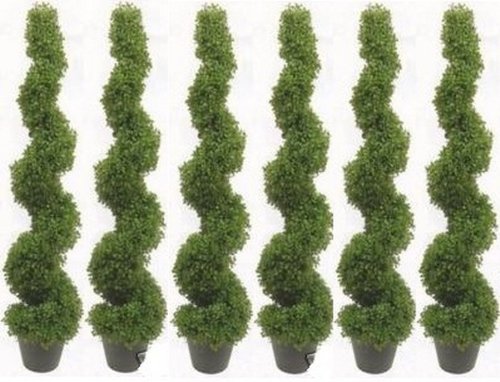

ULTRA-REALISTIC ARTIFICIAL TOPIARY BALLS - Designed to replicate the natural beauty of real greenery, these artificial topiary balls feature lifelike leaves with rich color variation and texture. The dense foliage creates a full, perfectly rounded shape that elevates any space. Ideal for indoor décor, outdoor planters, front door accents, and landscaping, they deliver a polished, high-end look without the maintenance of live plants.

Growth Rates and Long-Term Development
Growth rates vary considerably between smaller and larger trees, influencing long-term landscape performance. Smaller trees often establish roots more effectively, aiding quicker recovery from transplant shock and supporting healthier growth. A tree’s trunk in smaller specimens usually develops structural integrity faster, allowing for stable long-term development. Conversely, larger trees typically require 2 to 5 years to acclimate and build root strength, which delays their growth potential. Studies show that smaller trees exhibit rapid initial growth, frequently outpacing larger trees once established due to efficient root systems. This faster growth rate contributes to lower maintenance costs and improves ecological benefits. To summarize, smaller trees provide distinct advantages in growth and root development, which can greatly enhance a landscape’s health and overall performance over time. Additionally, the space-saving design of smaller trees makes them especially practical for compact environments, allowing for easier integration and management.
Choosing the Right Tree Size for Your Space
How should one determine the appropriate tree size for a specific landscape? To choose the right tree, assess available space and the tree’s mature trunk diameter and height. Smaller trees, often grown in 15-gallon or #15 containers, establish roots more effectively and adapt faster, making them easier to transplant with less shock. They generally cost around $100, offering budget-friendly options. Larger trees, with trunks already substantial in size, provide immediate aesthetic impact but require greater investment and pose more challenges during planting and establishment. Choosing the right tree size means balancing these factors: smaller trees offer quicker growth and easier care, while larger trees deliver instant presence yet demand more resources. Evaluating both tree size and trunk dimensions guarantees selection aligned with spatial constraints and long-term landscape goals. Additionally, for indoor spaces like apartment bedrooms, considering compact designs can help fit trees without overwhelming the area.
Frequently Asked Questions
What Is the 10 20 30 Rule for Tree Planting?
The 10-20-30 rule dictates species selection: ten species minimum, no more than 20% per species, and at least 30% native. Proper tree spacing, planting depth, soil quality, and maintenance schedules guarantee peak growth and reduce environmental impact.
Which Is the Most Common Mistake Made in Tree Planting?
The most common mistake in tree planting is improper planting depth, often burying the root collar. This error, combined with poor site assessment, inadequate watering techniques, incorrect pruning methods, and flawed tree selection, leads to compromised tree health and growth.
What Is the Chinese Proverb About the Best Time to Plant a Tree?
Ancient wisdom reveals that “The best time to plant a tree was twenty years ago; the second best time is now,” symbolizing growth’s patience, emphasizing timing importance, environmental benefits, cultural significance, and effective planting techniques for enduring impact.
Is It Better to Plant Smaller or Larger Trees?
Smaller trees offer better root development, lower maintenance requirements, and enhanced wildlife habitat, balancing aesthetics and shade benefits over time. Larger trees provide instant visual appeal but require careful space considerations and often more upkeep.


