As an Amazon Associate, we earn from qualifying purchases. Some links on this site are affiliate links at no extra cost to you. Our recommendations are based on thorough research and editorial judgment.


Slim Trees for Dark Corners: What Actually Works?

Slim indoor trees like ZZ plants and Dragon trees thrive in dark corners, growing vertically between 3 to 10 feet while occupying minimal floor space. These species tolerate low to moderate indirect light, require well-draining soil, and need watering only when the top inch of soil dries. Features such as thick, waxy leaves enhance shade tolerance and air purification. Alternatives include Corn plant and Parlor palm, offering diverse maintenance needs. Understanding proper care techniques guarantees healthier growth in tight, low-light spaces. Explore further for detailed species care and placement tips.
Key Takeaways
- Slim trees like ZZ plant and Dragon tree thrive in low light, making them ideal for dark indoor corners with minimal space.
- Plants with narrow, columnar growth such as Corn Plant and Ficus Willow Leaf fit tight areas while reaching heights up to 10 feet.
- Choose species with thick, waxy leaves for better shade tolerance and improved indoor air quality.
- Proper care includes moderate watering, maintaining 40-60% humidity, and cleaning leaves to support healthy growth in low light.
- Artificial slim trees offer year-round greenery in dark corners without maintenance, suitable where live plant care is challenging.
Benefits of Slim Indoor Trees in Low Light
You may be interested


Although low-light indoor environments challenge many plants, slim trees like the ZZ plant and Dragon tree excel in shaded corners. These slim indoor trees have vertical growth habits, often reaching 3 to 6 feet tall while occupying minimal floor space. Their ability to photosynthesize efficiently under limited light helps maintain healthy foliage and contributes to improved indoor air quality. Suitable for low-light indoor settings, they demand less frequent watering compared to larger species, making them practical for busy households. These trees enhance visual interest by adding height and texture without overwhelming the room, fitting neatly in narrow or awkward spaces. Incorporating slim indoor trees in dark corners balances aesthetics and functionality, promoting a calming atmosphere while maximizing greenery where traditional plants struggle to thrive. Additionally, selecting adjustable branches on faux trees can help simulate natural environments even in low-light apartment bedrooms.
Key Features to Look for in Trees for Dark Corners
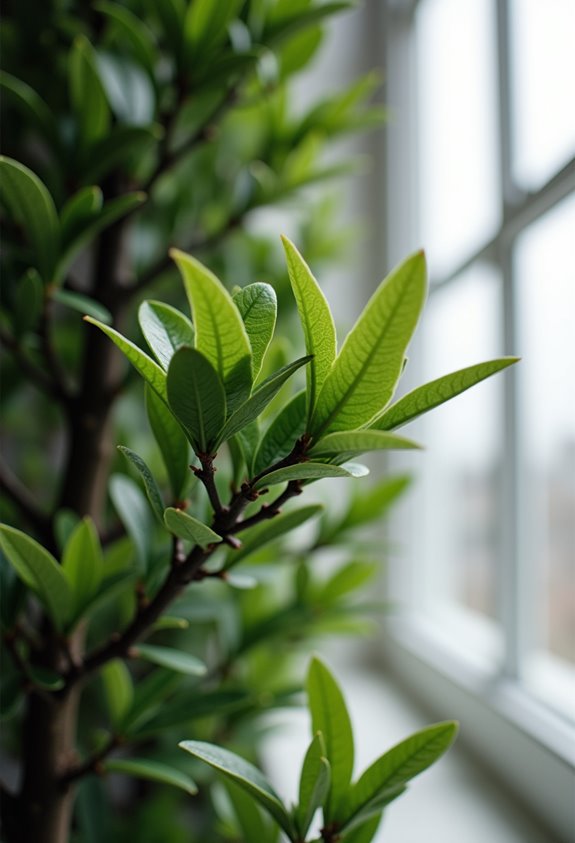
When selecting trees for dark corners, specific physical and physiological traits facilitate survival and growth in low-light conditions. A narrow evergreen tree with a slender, columnar shape saves space and fits tight areas well. Trees that prefer low to moderate indirect light thrive by efficiently photosynthesizing despite dim environments. Low maintenance is essential since these trees often tolerate irregular watering and minimal pruning. Additionally, species with adaptive leaves, such as thick, waxy coatings, reduce water loss and enhance shade tolerance. Selecting trees known for air purification improves indoor air quality alongside aesthetic benefits. Ideal choices feature root systems suited for confined pots, enabling them to grow healthily without constant repotting. Combining slim profiles with resilience facilitates practical success in decorating dark corners without constant care demands or space compromises. Many prelit pencil Christmas trees provide slim designs that save space and integrate lighting, making them suitable options for enhancing dark corners.
Corn Plant: A Resilient Choice for Dim Spaces
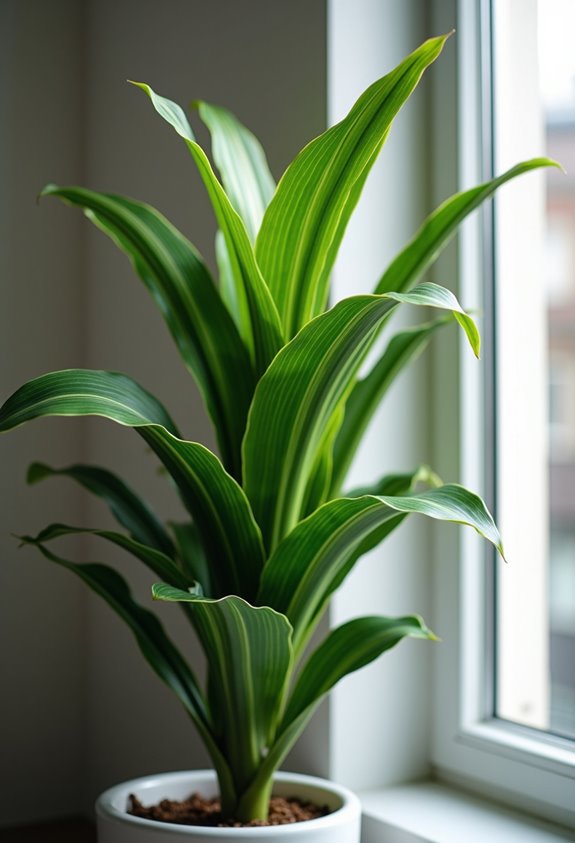
Due to its tolerance for low light, the Corn Plant (Dracaena fragrans) suits dim indoor spaces well. This indoor tree exhibits long, flat leaves growing from a thick stem, adding greenery without needing bright sunlight. The corn plant thrives in organic, well-draining soil kept consistently moist. Ideal temperatures range from 60 to 80°F, supporting steady growth despite the slower pace. Although slow-growing, it can reach several feet tall, fitting smaller or tighter spaces with its slender form. Regular care includes wiping leaves to remove dust, maintaining photosynthesis efficiency, and watering carefully to avoid root rot. Among indoor trees, the corn plant balances resilience and aesthetics, making it a reliable choice for low light areas lacking natural illumination. Its low-maintenance nature makes it comparable to low-maintenance greenery options suitable for busy individuals.
Dragon Tree: Adaptability in Low to Bright Light
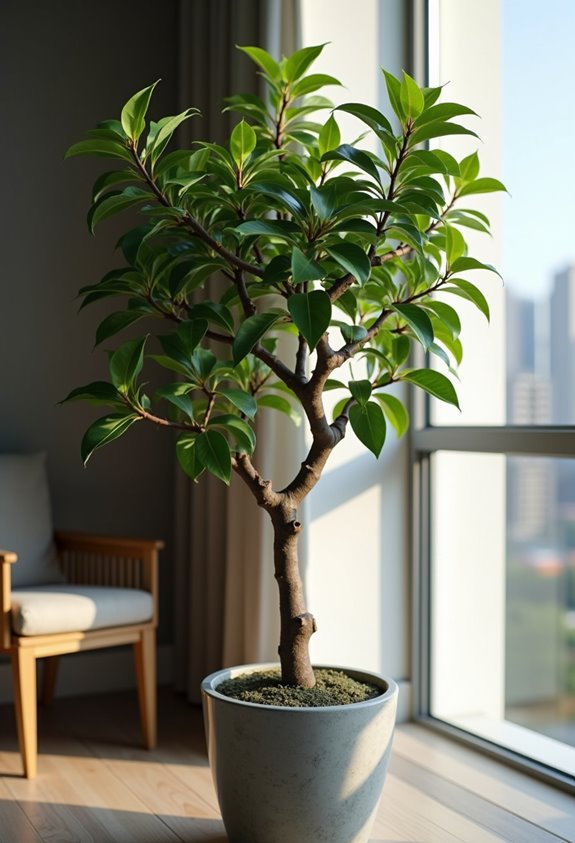
Following the corn plant’s performance in low-light settings, the Dragon Tree (Dracaena marginata) offers greater flexibility across lighting conditions. This slender tree adapts well from low light up to bright, indirect light, making it suitable for diverse indoor spaces. Typically reaching 6 to 10 feet tall, its long, sword-like leaves emerge from a central stem, adding vertical interest without occupying excessive floor space. The dragon tree thrives in well-draining soil and requires moderate watering—moist in growing seasons and drier in winter. Besides its aesthetic appeal, the dragon tree is valued for air-purifying properties, helping to improve indoor air quality by filtering common pollutants. Its adaptability and low-maintenance care make it a practical choice for both shaded corners and well-lit rooms. In apartments where space is limited, choosing plants with a slim profile helps maximize floor space without sacrificing greenery.
False Aralia and Its Humidity Preferences
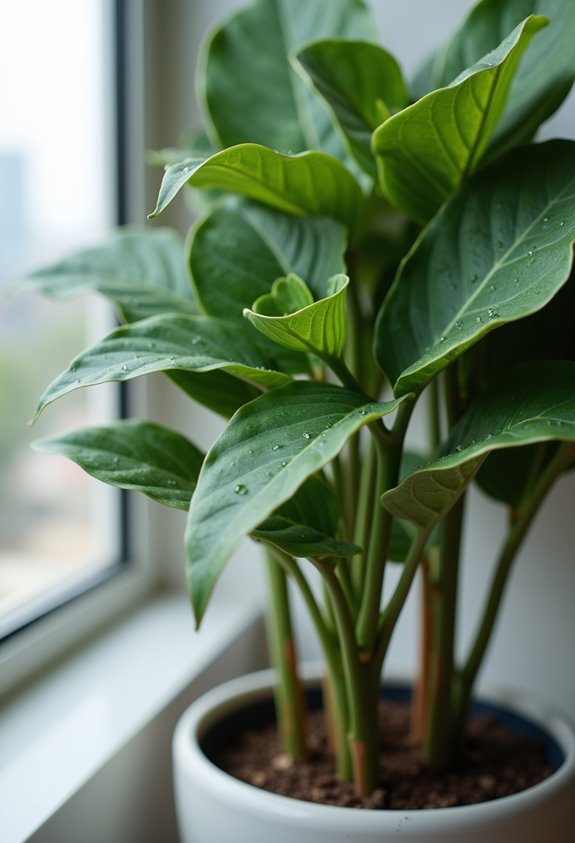
Although low light suits the False Aralia (Plerandra elegantissima), its growth relies heavily on humidity levels. This indoor tree thrives best in environments where humidity meets regular supplementation, as dry air impedes leaf health and glossiness. Maintaining temperatures between 65-85°F supports its moisture needs, while organic, well-draining soil prevents root rot caused by overwatering. Regular misting can effectively increase ambient humidity, enhancing the False Aralia’s condition in shaded spaces. Consistent soil moisture paired with periodic leaf misting creates an ideal microclimate for this plant. Its ability to tolerate low light yet demand balanced humidity makes it a practical choice for indoor areas with limited sunlight but controlled environmental conditions. Therefore, managing humidity is essential for sustaining False Aralia’s distinctive foliar vibrancy and overall liveliness. Additionally, selecting plants with realistic faux silk leaves can complement low-maintenance indoor decor enhancing overall aesthetic appeal.
Ficus Willow Leaf: Slim and Shade Tolerant
The Ficus Willow Leaf (Ficus Alii) reaches heights of 6 to 8 feet, ideal for vertical accenting in compact interiors. This slim tree features long, slender leaves, creating an elegant look suitable for narrow spaces and dark corners. It is remarkably shade tolerant, adapting well to low light conditions common in dimly lit rooms. For successful indoor gardening, consistent soil moisture is necessary, while temperatures should remain above 70°F to support growth. Regular pruning maintains its shape and encourages denser foliage, enhancing its visual appeal without expanding its footprint. Thanks to its ability to thrive with indirect sunlight, the Ficus Willow Leaf is a practical choice for adding greenery where space and light are limited, making it a reliable option for modern indoor environments. Artificial trees with minimal maintenance needs offer an alternative for similar aesthetic benefits without the care requirements.
Money Tree: Low Light and Positive Energy
Several indoor plant options thrive in low-light environments, including the Money Tree (Pachira aquatica). The money tree adapts well to low light, making it ideal for darker indoor spaces. It features a distinctive braided trunk and palmate leaves, often associated with positive energy in feng shui. Indoors, it can reach up to 6 feet tall, adding vertical interest to confined corners. Ideal temperatures range from 65 to 75°F, and watering should occur when the top inch of soil is dry to avoid root rot. While the money tree tolerates low light, it grows more robustly under bright, indirect light. Besides aesthetics, it also contributes to improved air quality, positioning it as a practical, positive energy-enhancing choice for low-light areas. For a maintenance-free alternative that offers a similarly slender silhouette, an Artificial Sansevieria Snake Plant can enhance minimalist contemporary decor without the need for sunlight or watering.
Norfolk Island Pine: Soft Texture in Limited Light
While thriving best in indirect light, the Norfolk Island Pine (Araucaria heterophylla) also tolerates darker indoor spots. This slim tree features a soft, fernlike texture, appealing in low light environments where other plants may struggle. It requires well-draining soil to prevent root rot, which is essential for maintaining healthy root systems. Norfolk Island Pines prefer moderate indoor humidity and benefit from occasional misting to avoid dryness. Indoors, they typically grow to 2-3 feet but can reach larger sizes outdoors in USDA Zones 9-11. Its adaptability to low light and manageable size makes this pine a practical choice for brightening dim corners with subtle greenery, combining aesthetics with resilience in spaces limited by natural light availability. Additionally, its vertical growth habit offers space-saving benefits ideal for narrow indoor areas.
Other Slim Tree Options for Tight, Dark Spots
Slim trees with narrow profiles suit cramped indoor spaces with minimal lighting. The ZZ Plant is a slender tree that thrives in low light and withstands drought, reaching 4-5 feet tall. Ponytail Palm adapts well to low light and requires minimal care, ideal for small spaces. Parlor Palm offers a slim design and grows 4-6 feet in low light environments, fitting into darker corners efficiently. Dragon Tree’s narrow growth and tolerance for lower light allow it to reach 6-8 feet, making it useful for tight indoor spots. Ficus Willow Leaf stands out as a tall, thin option up to 10 feet, combining height with adaptability in limited light. Artificial narrow charcoal trees also present a low-maintenance alternative, retaining their vibrant color and texture year-round without the need for watering or pruning.
Common Care Challenges for Indoor Trees in Low Light
Frequently, indoor trees in low light environments encounter slow growth and leaf drop due to insufficient photosynthesis. Low light reduces energy production, which limits cell division and leaf expansion. Overwatering often compounds problems because soil evaporates moisture more slowly, raising root rot risks in sensitive species like Chinese money trees. Additionally, curling leaves can signal stress, frequently linked to inadequate humidity or inconsistent watering. Trees such as the ZZ plant, although tolerant, still display these symptoms when conditions aren’t ideal. Nutrient deficiencies are common since low light slows nutrient uptake and metabolic rates, necessitating precise fertilization schedules. Moreover, poor air circulation and elevated humidity common in darker areas increase the likelihood of pest infestations, such as spider mites or scale insects, worsening plant health if unchecked. Selecting low-maintenance, drought-tolerant trees like the Blue Arrow Juniper can improve survival rates even in challenging indoor conditions.
Tips for Maintaining Healthy Slim Trees in Dark Corners
Managing indoor trees in dimly lit areas requires adapting care techniques to address unique environmental constraints. Choosing a low-light indoor tree like the ZZ Plant or Snake Plant guarantees better adaptation to limited sunlight. Proper watering involves allowing the top inch of soil to dry before re-watering, preventing root rot common in dark corners. To maintain humidity levels between 40-60%, using a humidifier or placing trees on pebble trays helps mimic their natural environment. Slow-release fertilizers applied during the growing season provide essential nutrients without overwhelming slow growth. Regularly cleaning the leaves removes dust, maximizing photosynthesis despite limited light. Consistent attention to these factors supports the healthy growth of slim trees in less illuminated interior spaces.
Frequently Asked Questions
What Are Those Skinny Trees Called?
Like slender towers in a medieval town, skinny trees are known as columnar or narrow tree options. They are integral to urban landscaping and vertical gardening, maximizing limited space while adding height and elegance to confined areas.
What Are the Best Small Trees for Shade?
The best small trees for shade include the Weeping Willow-Leaved Pear and Golden Irish Yew. Shade gardening benefits from their slender growth, while tree care focuses on adequate soil drainage and appropriate zone selection for ideal health and aesthetics.
What Are the Benefits of Tall, Skinny Trees?
Tall, skinny trees possess near-magical vertical growth that transforms cramped spaces, offering unmatched space optimization. Their slender form enhances aesthetic appeal while providing privacy, improved air quality, and noise reduction, making them invaluable for urban and indoor environments.
What Is the Best Tree for a Narrow Space?
The Forever Goldie Arborvitae excels as a narrow space tree in urban landscaping due to its limited 3-4 ft width and 12 ft height. Its compact form suits tree height considerations in constrained environments effectively.


